 EN
EN
 AR
AR
 FR
FR
 PT
PT
 RU
RU
 ES
ES
 BG
BG
 HR
HR
 CS
CS
 DA
DA
 NL
NL
 FI
FI
 DE
DE
 EL
EL
 HI
HI
 IT
IT
 JA
JA
 KO
KO
 NO
NO
 PL
PL
 RO
RO
 SV
SV
 CA
CA
 TL
TL
 ID
ID
 SR
SR
 SK
SK
 UK
UK
 VI
VI
 HU
HU
 TH
TH
 TR
TR
 MS
MS
 AZ
AZ
 KA
KA
 BN
BN
 LO
LO
 MN
MN
 MY
MY
 UZ
UZ


 EN
EN
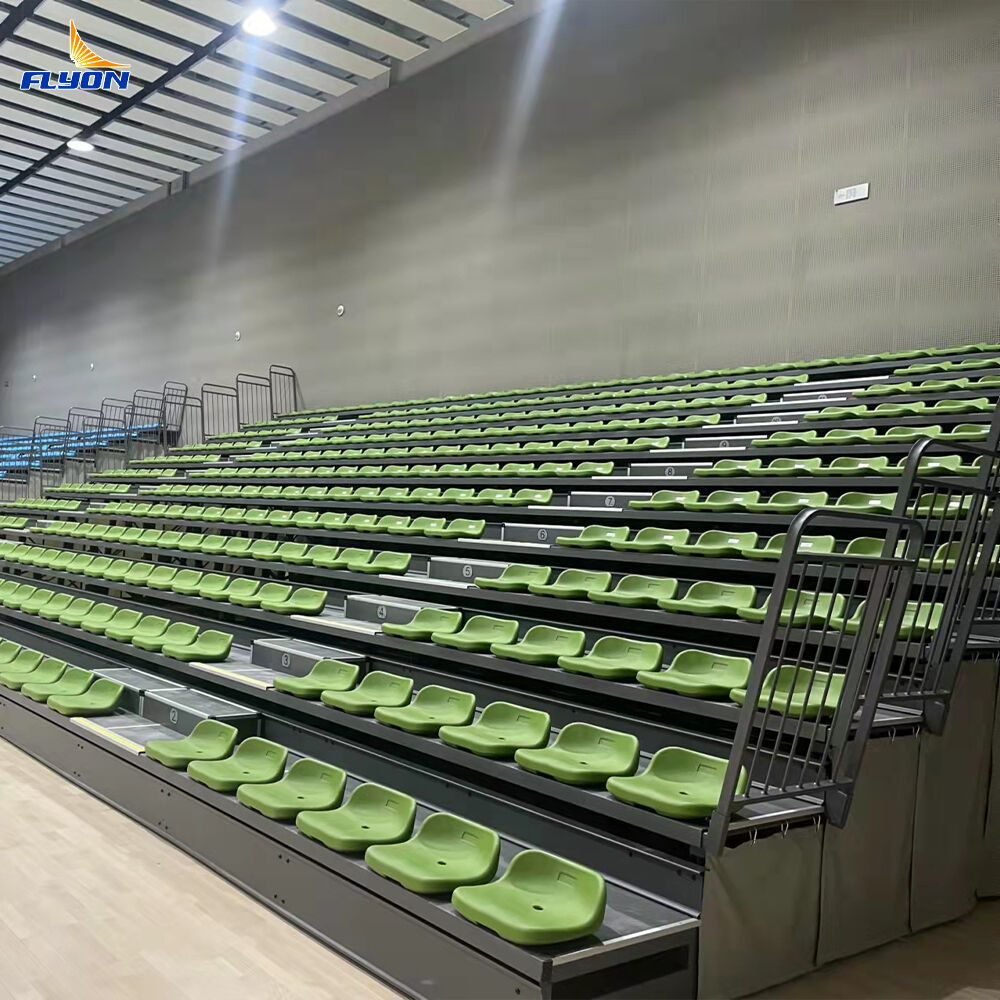
Material and Structural Durability of Stadium Bleacher Seats
Load-Bearing Performance Under Peak Crowd Loads: Steel Frames vs. Reinforced HDPE Systems
Bleachers at stadiums need to handle serious dynamic loads when packed full during big events. Steel frames give outstanding rigidity and spread weight evenly across surfaces, usually holding around 100 pounds per square foot or more, which makes them great for places where crowds pack in tightly. Reinforced HDPE (High-Density Polyethylene) stands out as well, offering similar strength relative to its weight but without any risk of rust or corrosion issues. What sets HDPE apart from steel is how little it bends under pressure, cutting down on those annoying stress cracks over time. Both materials work best with proper cross bracing for stability, but HDPE has an edge with its modular setup that speeds up installation times, particularly useful when dealing with tricky ground conditions or irregular sites where traditional methods might struggle.
Real-World Lifespan Benchmarks: Corrosion Resistance, UV Stability, and Maintenance Cycles
How long something lasts has more to do with how it holds up in actual conditions than just how strong it looks on paper. Take galvanized steel frames for instance they get their rust protection from hot dip galvanization, but when these are installed near the coast or where roads get salted during winter, things go south fast. Systems that aren't treated properly or neglected completely can actually lose around 40% of their expected lifespan if there's no yearly checkup and fresh coating applied roughly every five years. Now contrast that with UV stabilized reinforced HDPE material which naturally stands up against fading, cracking, and chemical damage. These structures maintain their structural integrity for over 25 years with minimal maintenance needed just cleaning twice a year will do. And because HDPE has this smooth non porous surface, graffiti doesn't stick to it nearly as much as it does on wooden surfaces or even painted metals, meaning property owners spend about 30% less money on those frustrating cleanups over time.
| Material | Corrosion Resistance | UV Degradation Cycle | Maintenance Frequency |
|---|---|---|---|
| Galvanized Steel | Moderate (requires coatings) | 10–15 years | Annual inspection, 5-year recoating |
| Reinforced HDPE | High (inherent) | 25+ years | Biannual cleaning, no structural upkeep |
Safety-Critical Design in High-Density Stadium Bleacher Seats
Compliance + Beyond: Handrails, Non-Slip Treads, and Aisle Widths per IBC & ASTM F2773
The IBC and ASTM F2773 standards form the absolute minimum requirements for stadium seating density, not some kind of gold standard. For safety's sake, handrails need to be at least 42 inches tall so people don't tumble over when crowds get rowdy. And those non-slip treads? They really should have a friction coefficient above 0.5 on sloped areas, otherwise folks could slip right through on rainy days or after ice melts. Let's talk about aisle space too. Anything narrower than 36 inches becomes a nightmare waiting to happen. According to the National Fire Protection Association, proper spacing cuts down fall injuries by around 60 percent (NFPA report from last year). Smart stadiums actually do more than just meet code basics. Some install antimicrobial coatings on railings to cut down on germs, while others embed LED lights along walkways so fans can find their way even when lights flicker out. These extras tackle risks that basic building codes simply overlook.
Crowd Flow Optimization: How Bleacher Layout Impacts Evacuation Time and Emergency Response
How bleachers are arranged makes all the difference when it comes to getting people out quickly during emergencies - which means safer crowds overall. Research shows that if there are more than 20 seats in a row without any cross aisles between them, exit times go up by nearly 40% according to Crowd Safety Institute data from last year. On the flip side, stadiums using staggered seating areas with those radial walkways can clear out entire 5,000 seat blocks within just three minutes flat. That kind of speed matches what first responders need to do their job properly. The secret sauce here lies in these special movement corridors spaced roughly 45 feet apart throughout the venue. These zones feature sloped steps designed to naturally steer fans towards exits, bright colored edges along stairs so folks can see where they're stepping even in low light conditions, plus strategically located emergency gear boxes that staff can grab fast when needed most.
Ergonomic Spectator Experience in Durable Stadium Bleacher Seats
Today's stadium bleacher seats aren't just throwing in ergonomic touches as fancy extras anymore. They're actually essential for keeping people comfortable throughout long games, building fan loyalty, and preventing problems down the line. Think about those old wooden benches that left everyone sore after three innings. Modern designs have curves shaped to fit how our spines naturally bend, which makes a big difference when sitting through marathon matches. The backrest angles and seat depth measurements are pretty carefully thought out too. These seats spread out pressure points so fans don't end up with numb legs halfway through the fourth quarter. Plus they meet all those ADA standards for accessibility. Some studies suggest these better designed seats keep folks in their seats about 34% longer on average. That means fewer people getting up and leaving because their backs are killing them.
Additional ergonomic innovations include:
- Integrated lumbar support, dynamically adapting to diverse body types
- Breathable, non-absorbent materials, preventing moisture buildup during multi-hour events
- Optimized legroom spacing, balancing seating capacity with functional knee clearance
Venues deploying these features report 28% higher concession revenue per attendee—evidence that comfort drives engagement. More importantly, this human-centered approach reduces liability exposure tied to posture-related injuries and fatigue-induced incidents.
Total Cost of Ownership: Balancing Upfront Investment with Long-Term Value of Stadium Bleacher Seats
Lifecycle Analysis: Replacement Frequency, Repair Costs, and Warranty Coverage Comparison
The real worth of stadium bleacher seats doesn't show up until we look at what they cost over 20 years instead of just focusing on the sticker price when purchased. Stadium managers end up spending money again and again because these seats need replacing sooner than expected, fixing unexpected problems, plus regular maintenance against things like rust or sun damage. When looking at how different options hold up over time, it becomes clear why newer engineered seating solutions tend to beat older models most of the time.
| Cost Factor | Traditional Steel Systems | Modern HDPE Systems |
|---|---|---|
| Initial Investment | Lower upfront cost | 15–20% higher |
| Replacement Cycle | 8–12 years | 25+ years |
| Annual Repairs | 3–5% of initial cost | <1% of initial cost |
| Warranty Coverage | 5-year limited | 20-year structural |
HDPE eliminates corrosion—the leading cause of early failure in metal bleachers—while extended structural warranties shift long-term liability away from facility operators. When factoring in labor, downtime, and safety compliance overhead, investing in durable, engineered HDPE seating delivers 30–40% net savings over two decades versus repeatedly replacing budget-grade alternatives.
FAQ
What are the advantages of using reinforced HDPE over steel for stadium bleacher seats?
Reinforced HDPE offers similar strength to steel but with less risk of rust or corrosion. It also provides ease in installation with a modular setup and requires minimal maintenance.
How does the cost of HDPE systems compare to traditional steel systems for bleacher seating?
While HDPE systems have a higher initial investment cost by 15–20%, they offer savings in the long run due to longer replacement cycles, minimal annual repairs, and extensive warranty coverage.
What are the maintenance requirements for reinforced HDPE compared to galvanized steel?
Reinforced HDPE requires only biannual cleaning and no structural upkeep, while galvanized steel needs annual inspections and recoating every five years to maintain corrosion resistance.