 EN
EN
 AR
AR
 FR
FR
 PT
PT
 RU
RU
 ES
ES
 BG
BG
 HR
HR
 CS
CS
 DA
DA
 NL
NL
 FI
FI
 DE
DE
 EL
EL
 HI
HI
 IT
IT
 JA
JA
 KO
KO
 NO
NO
 PL
PL
 RO
RO
 SV
SV
 CA
CA
 TL
TL
 ID
ID
 SR
SR
 SK
SK
 UK
UK
 VI
VI
 HU
HU
 TH
TH
 TR
TR
 MS
MS
 AZ
AZ
 KA
KA
 BN
BN
 LO
LO
 MN
MN
 MY
MY
 UZ
UZ


 EN
EN
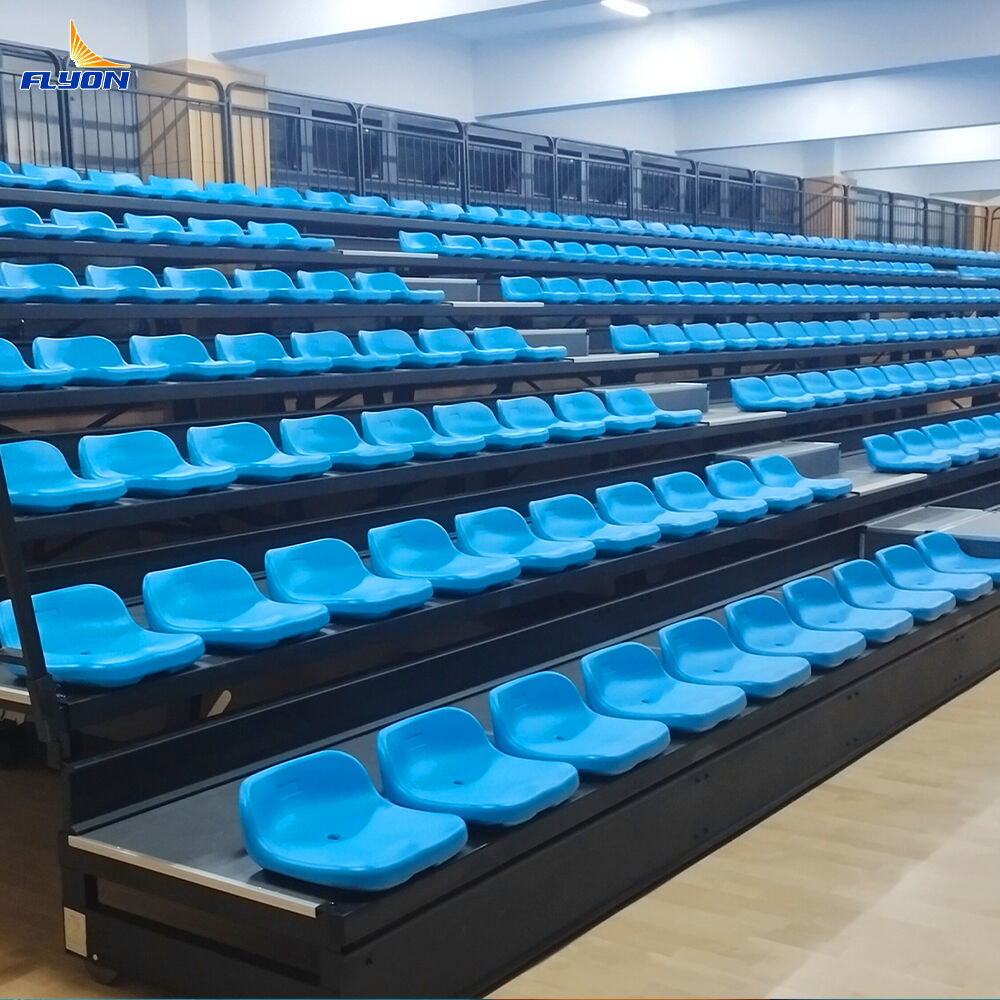
Unmatched Durability and Corrosion Resistance for Stadium Bleacher Seats
Aluminum and galvanized steel performance in high-humidity, coastal, and de-icing salt environments
Aluminum’s natural oxide layer provides inherent corrosion resistance—making it ideal for coastal venues where salt spray accelerates degradation. Galvanized steel leverages zinc coatings that sacrificially protect underlying metal, extending service life in regions using de-icing chemicals. Independent salt-fog testing confirms both materials retain full structural integrity after 5,000+ hours of exposure—critical for outdoor stadiums facing humidity extremes and aggressive chemical environments.
Strength-to-weight ratio benefits: how metal structure stadium bleacher seats support higher loads with slimmer profiles
Aluminum alloys deliver an exceptional strength-to-weight ratio, enabling support beams up to 30% slimmer while fully meeting ASTM F2087 requirements for 100 psf live loads. This efficiency allows denser spectator layouts without compromising safety or code compliance. Steel-aluminum hybrid frames further optimize performance—achieving verified load capacities exceeding 150 psf where traditional materials require significantly bulkier supports.
Hybrid frame innovation: why steel-aluminum combinations deliver superior 10-year lifecycle integrity vs. monomaterial designs
Hybrid frames strategically combine steel’s compressive strength with aluminum’s corrosion resistance—outperforming single-material alternatives in real-world conditions. Field studies show these systems maintain 98% structural integrity after ten years, compared to 78% for all-steel and 85% for all-aluminum designs. By placing steel in primary load paths and aluminum in moisture-prone joints and connections, hybrid systems reduce lifecycle maintenance by 40%—delivering longer service life and predictable performance.
Lower Total Cost of Ownership for Stadium Bleacher Seats
Metal vs. wood vs. concrete: upfront cost, installation time, and 15-year TCO analysis
While wood may appear less expensive upfront, metal stadium bleacher seats deliver superior long-term value. Modular aluminum and galvanized steel systems cut installation time by 30–50% versus concrete—eliminating curing delays and reducing crane and labor costs by ~40%, per industry construction benchmarks. Over 15 years, wood structures incur 60% higher total costs due to rot repairs, insect mitigation, and code-related upgrades. Metal’s corrosion resistance and dimensional stability minimize intervention—yielding 25–35% lower TCO than concrete and 45–55% lower than wood when factoring in recoating, fastener replacement, and load-test recertifications.
Maintenance savings: 72% reduction in labor, recoating, and replacement costs (NFBA 2023 benchmark)
Per the National Frame Builders Association’s 2023 benchmark study, metal stadium bleacher seats reduce lifetime maintenance expenditures by 72% versus traditional materials. Aluminum’s non-porous surface eliminates wood’s bi-annual sealing, while galvanized steel avoids concrete’s spalling repairs and rebar corrosion issues in de-icing environments. Labor savings stem from eliminating seasonal splinter sanding (~$1,200/year), termite/rot treatments (~$3,500/incident), and structural reinforcement for sagging ($8,000–$15,000/project). Metal systems retain coating integrity for 10+ years—versus wood’s 3–5 year recoating cycle—saving approximately $740,000 per 10,000-seat facility over 15 years.
Optimized Safety, Sightlines, and Crowd Capacity Through Metal Structural Engineering
ASTM F2087 Compliance: Load-Testing Advantages of I-Beam and Tubular Metal Frames for Stadium Bleacher Seats
Metal structural engineering ensures consistent compliance with ASTM F2087—the definitive U.S. standard for permanent bleacher safety. Rigorous load-testing validates I-beam and tubular metal frames under dynamic crowd conditions, sustaining up to 250 lbs per linear foot while resisting deflection. Predictable material behavior—steel’s high yield strength and aluminum’s fatigue resistance—enables optimized weight-to-capacity ratios, directly supporting higher occupant density without sacrificing structural integrity.
Tiered Sightline Engineering: How Precision Metal Fabrication Enables Unobstructed Views and ADA-Compliant Row Spacing
Precision metal fabrication—using laser cutting, CNC bending, and automated welding—ensures millimeter-level consistency in riser heights, tread depths, and row spacing. This eliminates visual obstructions between tiers and maintains geometric accuracy across thousands of seats. The result is unobstructed sightlines to the field—even from the highest rows—while seamlessly integrating ADA-compliant wheelchair spaces and aisle widths. Structural efficiency also minimizes vertical obstructions, and steeper, safely engineered rake angles reduce overall footprint—maximizing spectator capacity per square foot.
FAQ
What makes aluminum ideal for coastal stadiums?
Aluminum’s natural oxide layer provides inherent corrosion resistance, making it especially suitable for environments with high humidity and salt spray.
How do hybrid frames improve the durability of stadium bleacher seats?
Hybrid frames combine the compressive strength of steel with the corrosion resistance of aluminum, strategically placing these materials to minimize moisture-related damage, reduce maintenance, and extend the lifecycle.
Why are metal stadium bleacher seats more cost-effective over time compared to wood or concrete?
Metal systems require less time for installation, experience fewer maintenance issues like rot or spalling, and save costs on recoating and repairs, offering lower total cost of ownership over 15 years.
How does precision metal fabrication enhance sightlines?
Precision fabrication ensures consistent riser heights and row-spacing, eliminating visual obstructions and maximizing geometric accuracy for unobstructed views, even in ADA-compliant designs.
What safety advantages do metal frames provide?
Metal frames comply fully with ASTM F2087 standards, excelling in load-testing and material behavior to safely support higher occupant densities.
Table of Contents
-
Unmatched Durability and Corrosion Resistance for Stadium Bleacher Seats
- Aluminum and galvanized steel performance in high-humidity, coastal, and de-icing salt environments
- Strength-to-weight ratio benefits: how metal structure stadium bleacher seats support higher loads with slimmer profiles
- Hybrid frame innovation: why steel-aluminum combinations deliver superior 10-year lifecycle integrity vs. monomaterial designs
- Lower Total Cost of Ownership for Stadium Bleacher Seats
- Optimized Safety, Sightlines, and Crowd Capacity Through Metal Structural Engineering
-
FAQ
- What makes aluminum ideal for coastal stadiums?
- How do hybrid frames improve the durability of stadium bleacher seats?
- Why are metal stadium bleacher seats more cost-effective over time compared to wood or concrete?
- How does precision metal fabrication enhance sightlines?
- What safety advantages do metal frames provide?