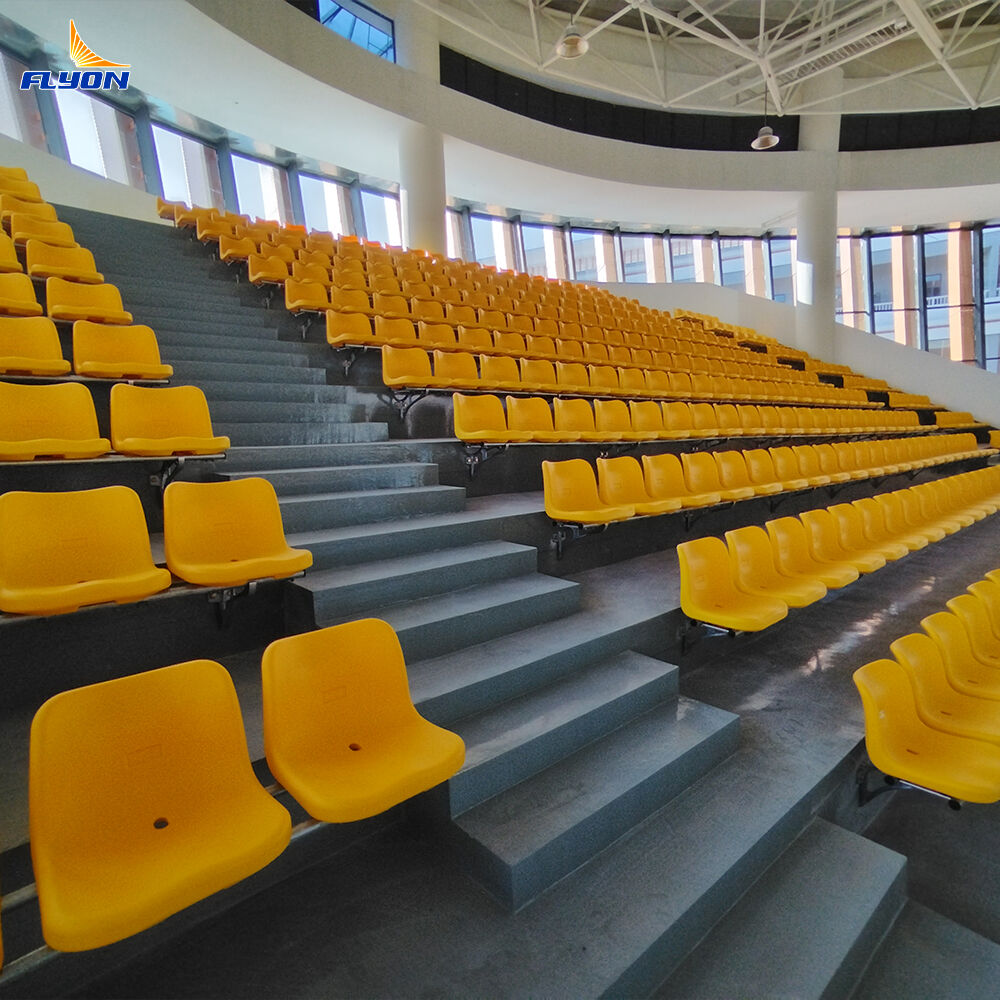
Why Standard Stadium Seats Fail Spectator Ergonomics
Musculoskeletal Strain from Static Postures and Poor Support
Most stadium seating keeps fans stuck in stiff, uncomfortable positions throughout entire games. These basic designs don't offer much support at all, leading to pressure points forming along both the spine and hips area. Research indicates around three out of four people end up with sore backs after just ninety minutes sitting there. The main issue seems to be the absence of proper pelvic support, something that puts real strain on those sacroiliac joints we all have. What makes matters worse are those fixed backrests that prevent our spines from moving naturally, causing tiredness in muscles like the trapezius and erector spinae pretty quickly. Sitting still like this actually raises compression in the lower back by about forty percent when compared to better designed seating options over the course of a standard three hour sporting event.
How Event Duration Amplifies Discomfort Without Ergonomic Design
After sitting in those uncomfortable seats for about an hour, most people start feeling really uneasy. Research indicates blood flow to the thighs decreases roughly 34% each hour when stuck in hard bucket seats, which explains why so many folks get numb legs and can't stop fidgeting. People tend to move around every few minutes without even realizing it, constantly searching for something comfortable enough to sit on during events they actually want to enjoy watching. Materials that don't let air through make things worse too. Some studies suggest that as seats warm up from body heat, the discomfort feels almost 30% worse than it actually is. When cushions don't adjust properly to how someone's weight distributes across them, long periods of sitting turn into a test of patience rather than an enjoyable experience at all.
Key Ergonomic Features That Make Stadium Seats Truly Supportive
Lumbar Support and Contoured Backrests for Spinal Alignment
Good lumbar support helps keep the spine in its natural S shape, which takes some pressure off the lower back when someone sits for long periods. Backrests that are curved tend to spread weight more evenly on the area around the tailbone, stopping people from slouching and cutting down muscle tiredness quite a bit compared to chairs without any curve. Around 40% less fatigue actually, according to some studies. Chairs with adjustable lumbar settings work better for different body shapes too. They stay aligned properly no matter if a person leans forward while working or lies back after a meal. This kind of flexibility makes sure the chair supports whatever position someone naturally falls into throughout their day.
Optimized Seat Dimensions and Angles for Pressure Relief
Seats that are around 18 to 22 inches deep help prevent pressure on the thighs while still accommodating taller individuals. When seats get wider than 22 inches, there's less compression on the hips and more room for side to side movement. The seat itself often has a slight forward tilt of maybe 5 to 7 degrees, which helps position the pelvis naturally and supports better posture along with improved blood flow. Studies looking at body mechanics have found that these small changes in dimensions can cut down on pressure spots by about 30 percent. Armrests that are wider and shaped properly also make a difference, reducing strain on the shoulders especially when someone is sitting through extended periods like meetings or travel time.
Breathable Fabrics and Adaptive Cushioning in Modern Stadium Seats
High-resilience foam layered with memory foam conforms to body contours without permanent deformation. Phase-change materials regulate temperature during multi-hour events, while perforated, moisture-wicking synthetics enhance airflow—cutting heat buildup by 60% versus vinyl. These features prevent sweat-related discomfort while preserving structural integrity, even through overtime games or full-length concerts.
Proven Impact: Real-World Performance of Upgraded Stadium Seats
Mercedes-Benz Stadium: Measurable Reduction in Spectator Discomfort Post-Retrofit
When Mercedes-Benz Stadium replaced rigid benches with contoured, lumbar-supporting seats, operators observed direct physiological and behavioral improvements. The retrofit prioritized spinal alignment and pressure distribution—two primary drivers of fatigue during extended events. Post-installation data revealed:
- 30% fewer guests reported back pain in the fourth quarter
- 22% shorter concession line wait times (indicating fewer “stretch breaks”)
- 15% higher satisfaction scores for events exceeding 3 hours
What we saw from these changes shows just how much better seating can affect how people actually feel at events. Seats with proper angles took pressure off hips, while the breathable foam helped keep folks cooler during those hot summer matches. Venues started seeing real improvements too fewer people leaving early, longer stays overall, and surprisingly enough, more money spent on souvenirs per person. All this proves that spending on comfortable seating isn't just about comfort it pays off in both running the place better and making more money at the same time.
The Future of Stadium Seats: Scalability, Inclusivity, and Smart Integration
The stadium seats of tomorrow promise to revolutionize how fans experience live events through several key advancements. Venues can now change their layout configurations within just three hours or so, switching effortlessly between concert setups and esports arenas while still keeping great sightlines and saving on staff time. The new designs incorporate inclusive features like seats that adjust width according to body size, fabrics designed for people with sensory sensitivities, and full compliance with accessibility guidelines so everyone gets a good seat regardless of ability. Smart tech has also been woven throughout these seats, with sensors tracking posture and environmental factors. These sensors then tweak lumbar support automatically and let fans order snacks without touching anything physical. According to recent venue data from 2024, this convenience factor alone raises fan happiness ratings by around 55%. Made primarily from recycled materials and produced using energy saving methods, these new systems help reduce stadium emissions by approximately 40%. Looking ahead, as 5G networks continue improving, we expect AI systems that fine tune comfort settings and AR interfaces showing game stats directly on seats to become pretty much standard equipment at most modern stadiums sometime around 2026.
FAQ
What causes musculoskeletal strain in standard stadium seats?
Standard stadium seats contribute to musculoskeletal strain due to their stiff positions, lack of pelvic support, and fixed backrests that prevent natural spine movement, increasing compression in the lower back.
How do ergonomic features improve stadium seating?
Ergonomic features like lumbar support, contoured backrests, optimized seat dimensions, and breathable materials distribute weight evenly, relieve pressure, and enhance comfort by adapting to body movements and temperature changes.
What impact did the upgraded seats at Mercedes-Benz Stadium have?
The upgraded seats at Mercedes-Benz Stadium reduced back pain by 30%, shortened concession line wait times by 22%, and increased satisfaction scores by 15% for events over three hours.
How are future stadium seats evolving?
Future stadium seats are becoming more scalable, inclusive, and integrated with smart technology, allowing adjustable configurations, accommodating various body sizes and needs, and enhancing user experience through posture tracking and environmental adaptation.
EN
AR
FR
PT
RU
ES
BG
HR
CS
DA
NL
FI
DE
EL
HI
IT
JA
KO
NO
PL
RO
SV
CA
TL
ID
SR
SK
UK
VI
HU
TH
TR
MS
AZ
KA
BN
LO
MN
MY
UZ