 EN
EN
 AR
AR
 FR
FR
 PT
PT
 RU
RU
 ES
ES
 BG
BG
 HR
HR
 CS
CS
 DA
DA
 NL
NL
 FI
FI
 DE
DE
 EL
EL
 HI
HI
 IT
IT
 JA
JA
 KO
KO
 NO
NO
 PL
PL
 RO
RO
 SV
SV
 CA
CA
 TL
TL
 ID
ID
 SR
SR
 SK
SK
 UK
UK
 VI
VI
 HU
HU
 TH
TH
 TR
TR
 MS
MS
 AZ
AZ
 KA
KA
 BN
BN
 LO
LO
 MN
MN
 MY
MY
 UZ
UZ


 EN
EN
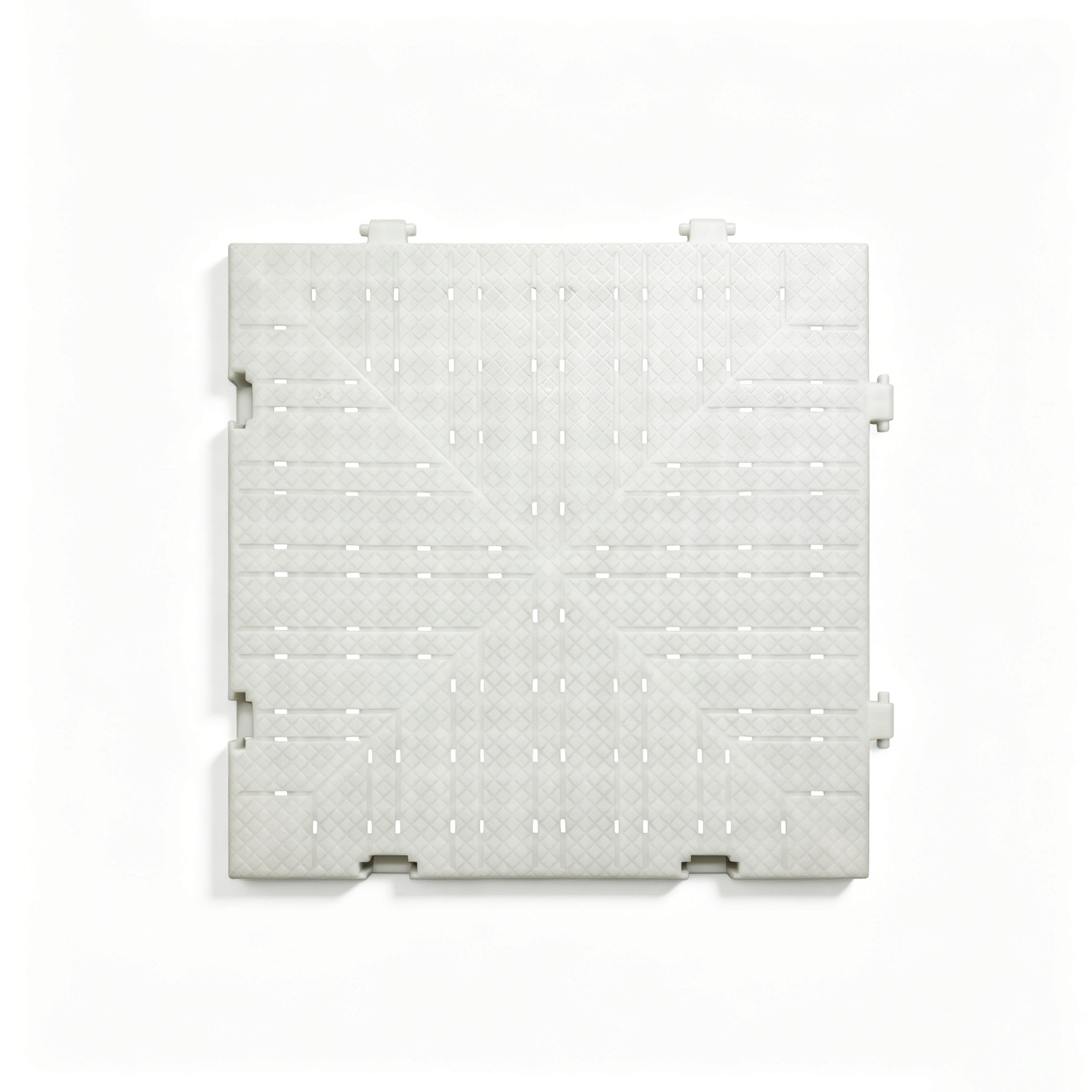
Why Running Track Cracks Demand Immediate Attention
A hairline crack on a running track rarely stays hairline for long. Water seeps in, freezes, expands, and widens the gap. UV radiation degrades the exposed edges. Athletes' spikes catch the lip and tear out chunks of surface material. Within a single season, what was once a cosmetic blemish becomes a trip hazard, a drainage failure point, and the starting line for a resurfacing project that costs ten times what an early repair would have. For facility managers responsible for an outdoor event trackway — whether a permanent stadium oval or a modular surface deployed for competitions — understanding when and how to repair cracks is not optional maintenance knowledge. It is the difference between a surface that serves for 15 years and one that fails in five.
The Hidden Risks Beneath a Surface Crack
When a crack appears on a synthetic running track, the visible fissure is only part of the problem. Water intrusion through the crack reaches the structural layers below — the elastic layer, the base mat, and eventually the asphalt or concrete subgrade. Once moisture reaches the subgrade, freeze-thaw cycling in colder climates begins lifting and shifting the foundation. In warmer regions, trapped water promotes subgrade softening and uneven settlement. The crack becomes a channel that steadily undermines the entire track cross-section. For an outdoor event trackway that may be deployed, dismantled, and redeployed across different venues, subsurface deterioration during storage or transit introduces additional failure modes that permanent installations do not face.
How Track Cracks Accelerate — The Domino Effect
Track crack progression follows a predictable pattern once water infiltration begins. Stage one: the surface coating separates along a line of tensile stress — often at a seam, a lane marking transition, or a high-impact zone like the takeoff board area. Stage two: moisture penetrates the structural layers, weakening the bond between the polyurethane surface and the rubber base. Stage three: repeated loading from foot traffic and equipment causes pumping action — water moves through the crack under pressure, eroding the base layer from below. Stage four: visible delamination, where the surface layer peels away from the substrate in sheets. Catching cracks at stage one keeps repair costs low and downtime minimal. Waiting until stage three or four typically means a full-depth reconstruction, not a repair.
Differentiating Cosmetic Cracks from Structural Failures
Not every visible line on a track surface signals structural trouble. Cosmetic cracks — fine, shallow separations in the topcoat only — can often be sealed with a thin polyurethane topcoat application and remain stable for years. Structural cracks, by contrast, penetrate through the full thickness of the synthetic surface into the base layers. A simple field test: if water pools in the crack after light hosing and does not drain, the crack has reached a permeable layer below and requires structural repair. If the track surface on either side of the crack feels spongy or produces a hollow sound when tapped, delamination has already begun underneath. Facility managers maintaining an outdoor event trackway should conduct this tap-and-water test at the start and end of each event season.
The Conditions That Cause Cracks on Outdoor Event Trackways
UV Radiation, Freeze-Thaw, and the Climate Factor
Polyurethane running surfaces are formulated with UV stabilizers, but no stabilizer offers permanent protection. Years of direct sun exposure break down polymer chains in the surface binder, reducing elasticity and creating micro-fissures that eventually propagate into visible cracks. In regions with hard freeze-thaw cycles — where temperatures swing from above freezing during the day to well below at night — the expansion and contraction of trapped moisture accelerates crack formation dramatically. An outdoor event trackway used in seasonal competition schedules faces compounded stress: the surface sits unused through extreme weather for months, then absorbs concentrated traffic during a compressed event window, with little recovery time between cycles.
Subgrade Instability and Drainage Failures
The single most preventable cause of running track cracks is poor drainage. When water cannot escape laterally through properly graded drains, it ponds on the surface or saturates the subgrade. Saturated subgrade loses bearing capacity. The track surface, still elastic but now supported by softened ground, flexes excessively under load. Repeated flexing creates fatigue cracks — typically in patterns that mirror the drainage failure zone. Facilities built on clay-heavy soils or sites with high water tables are especially vulnerable. Installing French drains, maintaining gutter and catch-basin clearance, and regrading perimeter areas that direct runoff onto the track are not secondary maintenance items — they are primary crack prevention measures.
The Wear Pattern Factor — High-Stress Zones on Any Running Surface
Certain zones on every running track absorb disproportionate wear. The inside lane of the home straight, the curve transitions where centrifugal force pushes athletes outward, the high-jump and long-jump approach areas, and the starting blocks zone all see concentrated spike pressure and shear forces. Over time, the surface elastomer fatigues in these zones before the rest of the track shows any aging. The pattern is identical on a permanent installation and on a modular event surface assembled from interlocking panels — high-load zones fail first. Mapping these stress concentrations during routine inspections allows maintenance teams to prioritize preventive sealing in the areas most likely to crack, rather than reacting after failure has already occurred.
Proven Repair Methods That Deliver Long-Term Results
Surface Preparation — The Step That Determines Repair Success
No repair material bonds well to a dirty, damp, or degraded surface — and no amount of product quality compensates for poor preparation. Effective crack repair starts with mechanical cleaning: rotary wire brushing or grinding to remove loose material, oxidized surface layers, and old line-marking paint from the crack edges. Compressed air follows to clear debris from the crack interior. For cracks deeper than 3 mm, vacuum extraction ensures no dust remains in the void. The cleaned crack must be completely dry before any repair compound is applied. On an outdoor event trackway deployed at a temporary venue, time pressure often tempts crews to skip full drying — a shortcut that reliably produces repair failure within weeks.
Resin Injection vs. Patch Repair — When to Use Each
Two primary repair approaches cover most running track crack scenarios. Low-viscosity polyurethane resin injection is the preferred method for narrow cracks under 5 mm in width. The resin flows into the crack by gravity or low-pressure injection, fills the void completely, cures to a flexible solid, and bonds to both crack faces. It restores the continuous waterproof membrane and accommodates the thermal movement that caused the crack originally.
For wider cracks and areas where surface material has already spalled away, a two-part patch repair becomes necessary. The process involves filling the void with a polyurethane-based repair mortar, screeding it level with the surrounding surface, and allowing full cure before applying a matching topcoat. The critical variable in both methods is material compatibility — the repair compound must share the same polyurethane chemistry as the original surface to achieve a lasting bond. Mixing chemistries, such as applying an epoxy-based filler to a polyurethane track, creates a rigid repair that cracks again under the first thermal cycle.
Post-Repair Curing, Line Marking, and Return-to-Play Timing
Cure time depends on temperature, humidity, and the specific repair product formulation. In general, polyurethane repair compounds achieve handling strength in 4 to 6 hours at 20°C and full cure in 24 to 48 hours. Rushing athletes back onto a partially cured repair surface creates depressions, uneven wear, and premature failure of the repair zone. After full cure, the repaired area requires reapplication of line markings using two-component polyurethane lane paint matched to the existing markings. For an outdoor event trackway serving a competition calendar, scheduling repairs in the off-season window or during a planned maintenance closure avoids last-minute compromises that undermine repair quality.
Preventative Practices That Reduce Crack Frequency
Inspection Schedules and Early Intervention Triggers
A structured inspection cadence catches cracks before they become structural problems. Monthly visual inspections during the active season should scan all lane markings, seam lines, high-jump and long-jump takeoff zones, and the inside-lane curve transitions — the zones where cracks appear earliest. Quarterly detailed inspections should include the tap-and-water test on any visible surface irregularities. Annual comprehensive inspections, ideally performed by a qualified track surface technician, should assess the full surface including drainage function, base-layer integrity through core sampling where indicated, and full-surface hardness and elasticity using a Clegg hammer or similar instrument. Every inspection should log findings with dated photographs to build a degradation timeline that informs capital planning.
Drainage Management, UV Protection, and Surface Load Control
Three preventative measures substantially reduce crack formation frequency. First, maintain positive drainage: clean catch basins monthly during the wet season, clear perimeter drains of leaf litter and debris, and ensure that adjacent landscaping does not direct runoff onto the track. Second, apply a UV-protective acrylic topcoat every three to five years — this sacrificial layer absorbs UV degradation and extends the life of the structural polyurethane beneath. Third, enforce surface load limits: restrict vehicle access to maintenance-only equipment with pneumatic tires, prohibit bleacher and equipment storage directly on the track surface, and use load-spreading mats when temporary structures must cross the track for event setup. Each of these practices applies equally to permanent installations and to an outdoor event trackway system, though the modular surface requires additional attention to panel-joint integrity during assembly and disassembly cycles.
A Real-World Case: Restoring a Competition-Ready Outdoor Venue
The Scenario — A Municipal Track Deteriorating Before a Regional Championship
A mid-sized city in the southeastern United States operated a municipal running track that also served as the primary competition surface for three high schools and a regional youth athletics program. Five years after its last resurfacing, the facility began showing multiple longitudinal cracks along lanes two and three on the back straight, plus a growing spider-crack pattern around the long-jump runway. With the state regional championship meet scheduled in five months, the facility manager faced a decision: attempt a full resurfacing with uncertain timeline feasibility, or execute a targeted repair program that would deliver a safe, competition-grade surface by the deadline.
The initial assessment identified three contributing factors. The track's subsurface drainage had been partially blocked by silt accumulation from an adjacent construction project. UV degradation had thinned the topcoat across the sun-exposed back straight. And heavy spike traffic in the inside lanes had fatigued the surface elastomer more severely than the outer lanes. The crack pattern was not structural on the subgrade level — core samples confirmed the asphalt base remained sound — but it was beyond cosmetic and actively widening.
Execution and Measured Outcomes
The repair program was executed over a six-week window. Phase one restored drainage: catch basins were cleaned, two new French drains were installed along the back straight perimeter, and the surrounding grade was re-sloped to direct runoff away from the track. Phase two addressed the surface: all cracks were mechanically routed, cleaned, and injected with a two-component polyurethane resin matched to the original surface chemistry. The spider-crack zone around the long-jump runway received a full-depth patch repair with polyurethane mortar, leveled, and top-coated. Phase three applied a fresh UV-protective acrylic topcoat across the entire track and re-striped all lane markings to competition specifications.
The track passed its pre-meet surface inspection and hosted the regional championship without any athlete complaints or safety incidents. Twelve months post-repair, follow-up inspection showed zero crack recurrence in treated zones. The facility manager reported that the total repair cost — including drainage work — came to approximately 18% of the quote they had received for a full resurfacing, and the track was projected to deliver at least four additional years of serviceable life before the next major intervention.
Frequently Asked Questions
What causes cracks to form on synthetic running tracks?
Cracks form from a combination of UV-induced polymer degradation, freeze-thaw cycling of trapped moisture, subgrade settlement, and repetitive mechanical stress in high-traffic zones. Poor drainage accelerates every crack mechanism by introducing water into structural layers where it causes the most damage.
How soon should a track crack be repaired once it is noticed?
A visible crack should be addressed within 30 days of detection. Delaying beyond that window allows water infiltration, edge degradation, and crack widening that transforms a simple sealant repair into a structural repair requiring material removal and replacement.
Can a cracked running track be repaired without closing the entire facility?
Most crack repairs can be executed with partial lane closures. Narrow cracks under 5 mm can often be repaired overnight with resin injection, allowing the lane to reopen within 24 to 48 hours. Wider structural repairs may require 3 to 5 days of closure for the affected zone.
Is resin injection or patch repair the better option?
Resin injection works best for narrow cracks under 5 mm where the edges are still intact. Patch repair is required for wider cracks, spalled areas, and zones where surface material has separated from the base. The correct choice depends on crack width, depth, and edge condition — not on preference.
How does weather affect the timing of track crack repairs?
Polyurethane repair materials require dry surface conditions and ambient temperatures typically above 10°C for proper curing. Repair work scheduled during a dry weather window of at least 48 hours produces the most reliable results. Cold or wet conditions extend cure time and risk poor bonding.
What inspection frequency is recommended for outdoor event trackways?
Monthly visual inspections during the active event season, quarterly detailed inspections including tap-and-water tests, and one comprehensive annual inspection by a qualified surface technician provide adequate detection coverage for most facilities. Higher-use venues benefit from biweekly visual checks during peak season.
Does an outdoor event trackway require different repair approaches than a permanent track?
The repair chemistry is similar, but modular outdoor event trackway systems add panel-joint integrity and connector-wear factors that permanent installations do not have. Disassembly, transport, and reassembly cycles introduce mechanical stress at joints that should be inspected separately from surface crack assessments.
How much does running track crack repair typically cost compared to full resurfacing?
Targeted crack repair programs typically cost 15% to 25% of a complete resurfacing project, depending on crack density, drainage condition, and whether topcoat reapplication is included. Early-intervention repairs at the hairline stage can cost as little as 5% of a resurfacing budget.
Choosing a Reliable Track Surface Partner
Crack repair quality depends as heavily on manufacturing expertise and material consistency as on application technique. A surface supplier with in-house polyurethane formulation capability, documented quality control processes, and experience across both permanent stadium installations and portable outdoor event trackway deployments brings a depth of technical knowledge that commodity suppliers cannot match.
FLYON provides engineered sports surface solutions backed by manufacturing experience across running tracks, modular event flooring, and stadium infrastructure. The company's product range spans full polyurethane track systems, portable modular surface panels, and complementary stadium equipment — a breadth that allows facility managers to source surface materials, repair compounds, and event-deployment systems from a single supply chain with consistent quality standards. For organizations managing both permanent athletic facilities and temporary competition venues, engaging a manufacturer with proven formulation control, documented project track records, and responsive technical guidance builds the operational confidence that fragmented, multi-supplier sourcing cannot deliver.
Table of Contents
- Why Running Track Cracks Demand Immediate Attention
- The Conditions That Cause Cracks on Outdoor Event Trackways
- Proven Repair Methods That Deliver Long-Term Results
- Preventative Practices That Reduce Crack Frequency
- A Real-World Case: Restoring a Competition-Ready Outdoor Venue
-
Frequently Asked Questions
- What causes cracks to form on synthetic running tracks?
- How soon should a track crack be repaired once it is noticed?
- Can a cracked running track be repaired without closing the entire facility?
- Is resin injection or patch repair the better option?
- How does weather affect the timing of track crack repairs?
- What inspection frequency is recommended for outdoor event trackways?
- Does an outdoor event trackway require different repair approaches than a permanent track?
- How much does running track crack repair typically cost compared to full resurfacing?
- Choosing a Reliable Track Surface Partner