 EN
EN
 AR
AR
 FR
FR
 PT
PT
 RU
RU
 ES
ES
 BG
BG
 HR
HR
 CS
CS
 DA
DA
 NL
NL
 FI
FI
 DE
DE
 EL
EL
 HI
HI
 IT
IT
 JA
JA
 KO
KO
 NO
NO
 PL
PL
 RO
RO
 SV
SV
 CA
CA
 TL
TL
 ID
ID
 SR
SR
 SK
SK
 UK
UK
 VI
VI
 HU
HU
 TH
TH
 TR
TR
 MS
MS
 AZ
AZ
 KA
KA
 BN
BN
 LO
LO
 MN
MN
 MY
MY
 UZ
UZ


 EN
EN
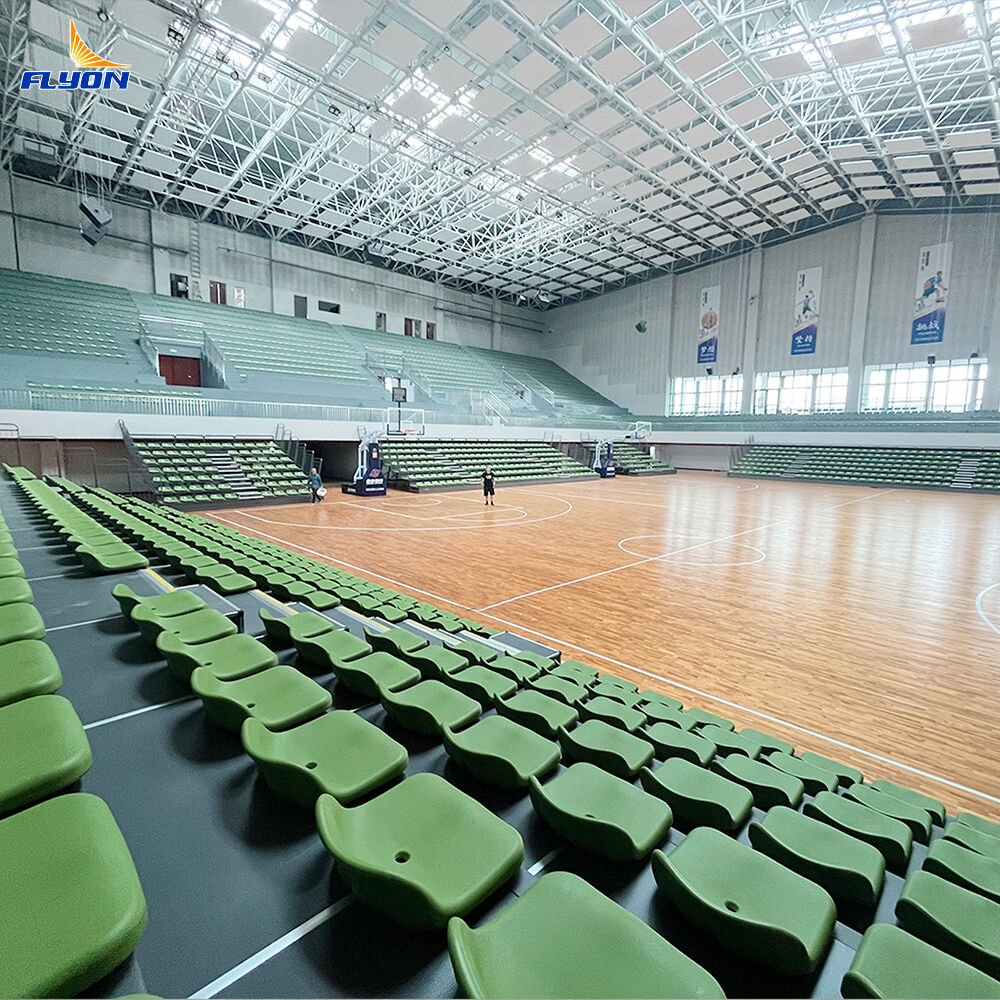
Ergonomic Design Principles Behind Flyon’s Stadium Bleacher Seats
Modern stadium bleacher seats prioritize spectator comfort through scientifically validated ergonomic features. Research shows spectators experience 40% less discomfort during extended events with proper cushioning systems (Sports Facility Analytics 2023), while inadequate support increases early departure rates by 32%.
Cushioning, Contouring, and Ventilation for All-Day Spectator Comfort
High-density foam padding with memory properties adapts to body shapes, distributing weight evenly to reduce pressure points. Strategic contouring maintains spinal alignment through lumbar support curves, decreasing back strain during 3+ hour events. Ventilation channels within seatbacks facilitate airflow, preventing heat buildup—the leading cause of discomfort in outdoor venues. These elements work synergistically to enable uninterrupted viewing comfort across varying climates.
Optimized Legroom and Tiered Sightline Integration in Bleacher Layouts
| Feature | Specification | Spectator Impact |
|---|---|---|
| Legroom depth | 30–33 inches minimum | Eliminates knee compression |
| Row elevation gradient | 6–12 inches per tier | Maintains clear sightlines |
| Seat pitch angle | 15–20 degrees | Prevents neck strain |
Precision-engineered tiering ensures unobstructed views while accommodating 22% more legroom than conventional designs. Angled riser systems maintain natural sightlines to field-level action without requiring neck craning. This spatial optimization allows easy aisle access during events while meeting ADA accessibility standards.
Structural Integrity and Safety Engineering of Stadium Bleacher Seats
Frame Systems Compared: I-Beam vs. Angle Steel for Load Distribution and Long-Term Stability
I-beam frames excel in vertical load distribution, with their web-flange design reducing deflection by up to 40% compared to angle steel under dynamic loads like crowd surges—making them ideal for multi-tier installations where structural failure risks escalate with height. Angle steel offers cost efficiency for low-rise bleachers under eight rows, though its L-shaped profile requires supplemental cross-bracing to meet the IBC 2021 live-load standard of 100 psf. Both systems must incorporate seismic bracing in high-risk zones, with I-beams providing inherent resistance to torsional stress during events.
Weather-Resistant Materials: Galvanized Steel and Powder-Coated Aluminum Performance
Galvanized steel’s zinc coating provides 50+ years of rust protection in coastal environments, outperforming standard paints by resisting salt corrosion at an annual loss rate of just 0.05mm. Powder-coated aluminum combines lightweight installation—35% lighter than steel—with UV stability, maintaining color integrity for 15+ years without chalking. Both materials undergo accelerated weathering tests simulating 20-year exposure: galvanized steel shows <5% surface degradation, and aluminum retains 98% adhesion strength after 5,000 hours of humidity cycling.
Fixed vs. Telescopic Stadium Bleacher Seats: Balancing Stability, Flexibility, and Compliance
Safety Standards Alignment: IBC 2021, ANSI A117.1, and NFPA 101 Requirements
Compliance with safety regulations is non-negotiable for modern stadium bleacher seats. Both fixed and telescopic systems must meet rigorous standards like the International Building Code (IBC) 2021 for structural integrity, which mandates minimum load capacities of 100 psf for concentrated loads according to occupancy classifications. Accessibility requirements under ANSI A117.1 ensure proper wheelchair spacing (minimum 36" width) and companion seating distribution. Meanwhile, NFPA 101 fire safety protocols dictate critical egress parameters—including minimum 22-inch clear aisle widths per seat row, illuminated exit path markings at ≤30-foot intervals, and maximum travel distances to exits (200 feet for unsprinklered facilities).
Venue operators must verify third-party certification documents annually, as failure to comply can increase liability risks by 47% according to venue safety audits (2023). These universal codes create a consistent safety baseline regardless of seating configuration while addressing spectator density challenges in high-occupancy venues.
Proven Performance: Real-World Validation of Flyon’s Stadium Bleacher Seats
Independent testing confirms these seating systems withstand 1.5× design loads while maintaining structural integrity for over a decade. Venues report 99.7% retention of critical safety features like guardrail stability after 10+ seasons. This endurance directly translates to reduced lifetime costs—facilities using compliant designs save $740k in maintenance versus non-certified alternatives over 15 years (Ponemon 2023).
Rigorous field validation aligns with IBC 2021 egress requirements and NFPA 101 crowd management protocols. Stadiums document consistent load distribution during peak-capacity events, with zero deflection incidents across 8 million spectator-hours. Such performance metrics prove essential for venues prioritizing both patron safety and long-term operational efficiency—underscoring why durable stadium bleacher seats are foundational investments for modern sports infrastructure.
FAQ Section
What makes Flyon's stadium bleacher seats ergonomic?
Flyon's stadium bleacher seats are designed with high-density foam padding and memory properties to adapt to body shapes, distribute weight evenly, and reduce pressure points. They also include strategic contouring for spinal alignment and ventilation channels to prevent heat buildup.
How do Flyon's bleacher seats optimize legroom and sightlines?
The seats provide 30-33 inches of legroom depth, use a row elevation gradient of 6-12 inches, and feature a seat pitch angle of 15-20 degrees, all of which eliminate knee compression, maintain clear sightlines and prevent neck strain.
What materials are used in the construction of Flyon's bleacher seats that make them weather-resistant?
Flyon's stadium bleacher seats utilize galvanized steel and powder-coated aluminum. Galvanized steel offers rust protection with zinc coating, and powder-coated aluminum maintains color integrity and UV stability.
How do Flyon's stadium bleacher seats adhere to safety standards?
Both fixed and telescopic seating systems comply with IBC 2021, ANSI A117.1, and NFPA 101 requirements, ensuring structural integrity, wheelchair accessibility, and fire safety standards.
What kind of real-world performance validation have Flyon's seats undergone?
Independent testing has proven that Flyon's seating systems maintain structural integrity while meeting design loads. Venues report high retention of safety features over a decade, translating to reduced lifetime costs and zero deflection incidents.
Table of Contents
- Ergonomic Design Principles Behind Flyon’s Stadium Bleacher Seats
- Structural Integrity and Safety Engineering of Stadium Bleacher Seats
- Fixed vs. Telescopic Stadium Bleacher Seats: Balancing Stability, Flexibility, and Compliance
- Proven Performance: Real-World Validation of Flyon’s Stadium Bleacher Seats