 EN
EN
 AR
AR
 FR
FR
 PT
PT
 RU
RU
 ES
ES
 BG
BG
 HR
HR
 CS
CS
 DA
DA
 NL
NL
 FI
FI
 DE
DE
 EL
EL
 HI
HI
 IT
IT
 JA
JA
 KO
KO
 NO
NO
 PL
PL
 RO
RO
 SV
SV
 CA
CA
 TL
TL
 ID
ID
 SR
SR
 SK
SK
 UK
UK
 VI
VI
 HU
HU
 TH
TH
 TR
TR
 MS
MS
 AZ
AZ
 KA
KA
 BN
BN
 LO
LO
 MN
MN
 MY
MY
 UZ
UZ


 EN
EN
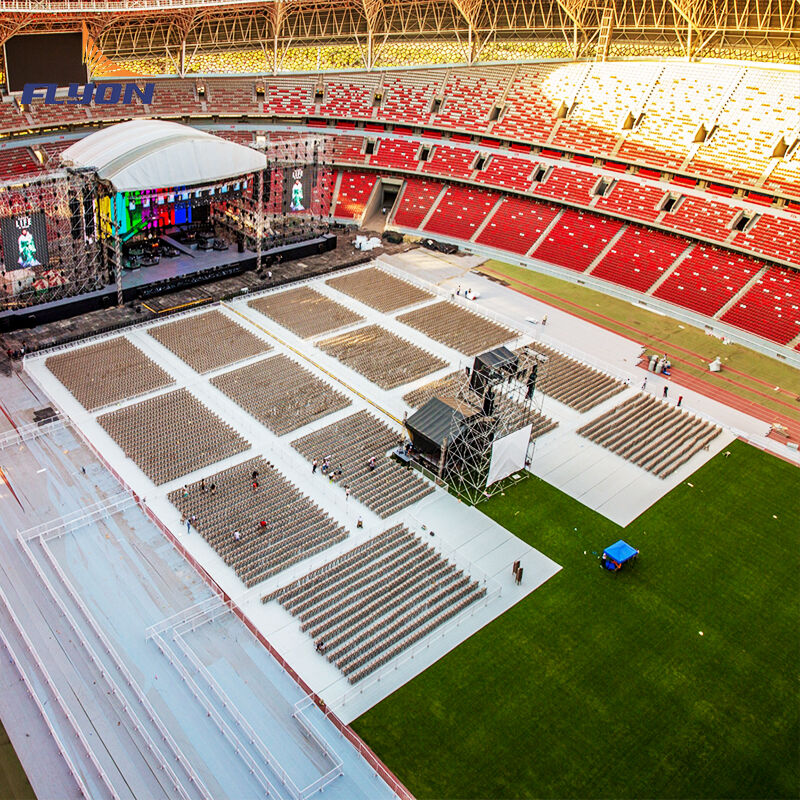
Why Turf Protection Is Critical on High-Traffic Sports Fields
Biomechanical stress and soil compaction: How foot traffic degrades root zones and surface integrity
When athletes repeatedly move across fields and equipment gets dragged over the same spots, all that force builds up in tiny sections of turf. This creates mechanical stress that actually squishes soil particles together by about 40% in those heavily used areas according to studies published in turf science journals. Once the soil gets packed down tight, air and water just can't get through properly anymore, which leaves plant roots gasping for resources. Weaker roots mean the grass simply isn't tough enough to handle regular traffic, so patches start to look worn out and bumpy places appear where people might trip or slip. For fields with thick clay soil types, things get even worse since compaction levels there often hit over 300 pounds per square inch, way beyond what most grass species need to grow strong and healthy roots.
Real-world consequences: From playability loss to costly seasonal reinstallation
Degraded turf directly undermines athletic performance, safety, and facility economics. Hardened surfaces increase impact forces on joints by 15–20%, elevating injury risk during pivots or falls. Uneven terrain also disrupts ball roll predictability—critical in soccer and field hockey. Facilities face recurring operational costs:
- Annual re-leveling and top-dressing averages $18,000 per field
- Full turf replacement every 3–5 years requires $120,000+ investments
- Lost revenue from canceled events during 6–8 week renovation cycles
Turf protection systems mitigate these losses by distributing loads across broader surfaces—preventing irreversible damage that otherwise triggers full-field replacement after major events.
How Turf Protection Mats Work: Engineering Principles and Performance Metrics
Load distribution, permeability, and Gmax reduction—key mechanisms behind effective turf protection
Turf protection mats designed for high performance help keep fields in good shape by relying on three main engineering concepts: spreading out weight, letting water pass through, and reducing impact forces. When these mats distribute weight properly across the surface, they stop those pesky pressure spots from forming which can push around the infill material and damage grass fibers. This is really important for sports fields that get used often for games and events. The materials also let most of the rainwater drain away naturally since around 95% of water just flows right through them, preventing puddles and keeping roots healthy even after heavy rains. Plus, special polymers in these mats actually soak up some of the impact when players land hard on the field. Tests show this can cut down on dangerous impacts by about 15 to 25 percent according to standard safety measurements. All these features work together so fields meet both performance requirements and safety guidelines while still looking great season after season.
Comparing Turf Protection Mat Solutions: Durability, Cost Efficiency, and Field Longevity
Omnideck® vs. Matrax®: Head-to-head analysis of structural performance and maintenance savings
The design approaches of Omnideck® and Matrax® are pretty different when it comes to how they hold up over time and how easy they are to work with day to day. With its honeycomb pattern, Omnideck spreads out pressure points over about three times the surface area compared to regular grid systems. Field tests show this actually cuts down on soil compaction by around 57%, which helps keep roots healthy even during long events. Matrax takes a different route with those solid ribs that give good stiffness at first glance, but there's a catch. The grass underneath tends to suffer in certain spots, so fields need moving around about 30% more often to prevent wear and tear on the turf. When it comes to maintenance, the difference becomes really clear. A person can usually move Omnideck tiles alone in less than two hours per field area. Not so with Matrax though – its roll format means multiple workers are needed, adding roughly 15 extra labor hours each month. Both products pass the ASTM F355-22 safety requirements, but looking at long term performance tells another story. After five seasons in the field, Omnideck still holds about 92% of its original strength while roll based options drop to just 78%. That makes a real difference for facilities planning their investments.
ROI insight: 63% average reduction in infill top-dressing and re-leveling labor (per ASTM F355-22 field audits)
Independent audits across 42 high-use fields confirm that optimized turf protection delivers measurable ROI:
- Material preservation: Reduced infill displacement cuts annual top-dressing by 220 tons per field ($18,000 savings)
- Labor efficiency: 63% fewer hours spent on surface rehabilitation post-events
- Field availability: 14 additional playable weeks annually by eliminating recovery downtime
Facilities prioritizing durability over upfront cost achieve three-year ROI through:
- Eliminating $74,000 in seasonal turf reinstatement
- Reducing staff injury risk during field repairs by 41% (OSHA 2023 data)
- Extending turf replacement cycles from 4 to 7 years
Selecting the Right Turf Protection System for Your Field Type and Usage Profile
Picking the correct system means matching what technology can do with factors like how the field is built, how often it gets used, local weather patterns, and available workforce. Fields covered in real grass generally need better water drainage rates around 25 liters per square meter per second minimum to avoid problems with soil becoming too wet and stagnant. Synthetic surfaces work best when they have good weight distribution features that keep the tiny bits inside from shifting around too much. How often something gets played on matters a lot too. Places that throw big events every week should go for quick setup panels that can handle at least 500 pounds per square inch pressure before breaking down. But if a facility only sees action seasonally, maybe going lighter makes more sense financially. Weather conditions also play into this decision making process. Areas where temperatures swing between freezing and thawing need materials that stay dimensionally stable even when temps drop below zero degrees Celsius, showing minimal expansion or contraction within about 0.15 percent range. Beachside locations will want polymer blends that resist damage from salt water exposure. Studies show modular systems with interlocking pieces cut down installation time roughly forty percent versus traditional rolled out mats according to maintenance reports from sports complexes across the country. Before finalizing anything though, it's wise to bring in someone who specializes in turf science or agriculture to check those safety numbers called Gmax values which usually need to stay under 165 depending on exactly what kind of playing surface we're talking about here. Getting these details right helps protect athletes while keeping costs reasonable over time.
Frequently Asked Questions
What is the impact of turf compaction on sports fields?
Turf compaction affects both the soil and grass, restricting air and water flow and weakening root structures. This can result in a degraded playing surface that contributes to increased injury risks and higher maintenance costs.
How do turf protection mats help in maintaining sports fields?
Turf protection mats distribute weight across broader surfaces, allowing for better water permeability and reducing impact forces. This helps preserve the integrity of the grass and soil, extending the playing field's longevity and enhancing player safety.
Which is better for high-traffic fields, Omnideck® or Matrax®?
Omnideck® typically offers greater durability with its honeycomb pattern, reducing soil compaction and simplifying maintenance. Matrax® requires more frequent repositioning and higher labor input, though it meets standard safety requirements.
What should facilities consider when selecting a turf protection system?
Facilities should consider field usage frequency, local climate conditions, and the type of playing surface. Modular systems are preferable for frequent events, while lighter systems may be more cost-effective for seasonal use.
Table of Contents
- Why Turf Protection Is Critical on High-Traffic Sports Fields
- How Turf Protection Mats Work: Engineering Principles and Performance Metrics
- Comparing Turf Protection Mat Solutions: Durability, Cost Efficiency, and Field Longevity
- Selecting the Right Turf Protection System for Your Field Type and Usage Profile
- Frequently Asked Questions