 EN
EN
 AR
AR
 FR
FR
 PT
PT
 RU
RU
 ES
ES
 BG
BG
 HR
HR
 CS
CS
 DA
DA
 NL
NL
 FI
FI
 DE
DE
 EL
EL
 HI
HI
 IT
IT
 JA
JA
 KO
KO
 NO
NO
 PL
PL
 RO
RO
 SV
SV
 CA
CA
 TL
TL
 ID
ID
 SR
SR
 SK
SK
 UK
UK
 VI
VI
 HU
HU
 TH
TH
 TR
TR
 MS
MS
 AZ
AZ
 KA
KA
 BN
BN
 LO
LO
 MN
MN
 MY
MY
 UZ
UZ
 EN
EN
Sport-Specific Turf Protection Demands and Wear Pattern Analysis
Mapping high-stress zones: pitcher's mound, penalty spot, and sideline dynamics
Different parts of sports fields show unique signs of wear that call for specific approaches to turf care based on what actually happens during games. Take baseball pitcher's mounds for instance they get hammered by all those repeated windups and landings which create serious rotational stress. Soccer fields have their own problem spots too the penalty areas take a beating from cleats digging into the same spot over and over again. And don't even get me started on sidelines where players constantly run back and forth, equipment gets staged, and infill just keeps getting pushed around. Studies show these high traffic zones can wear down three times faster than regular playing areas according to reports from Sports Turf Managers Association back in 2022. To protect against this damage, field managers need to apply different fixes depending on the area. For rotational stress zones like pitcher's mounds, subsurface stabilization works wonders. Penalty kick spots benefit from shock absorbing materials underneath them. Alongside areas, installing modular panels helps distribute weight better. Get these right and synthetic turf lasts about 40 percent longer while also making surfaces less hard. Harder surfaces are bad news because they contribute to leg injuries, something every coach wants to avoid.
Comparative field load profiles—NFL, FIFA, and NCAA—and implications for turf protection
Protecting turf surfaces needs to match how different sports actually play out on the field. Take NFL fields for instance they get hammered by those heavy cleats from players who weigh over 300 pounds and make sharp turns at full speed. Soccer fields according to FIFA standards deal with constant sliding and all sorts of sideways movements throughout matches. Then there are NCAA facilities which struggle with their schedules since they host multiple sports sometimes even four different ones like football, soccer, lacrosse and track events on the exact same ground. All this back and forth causes the grass to compact down unevenly and wears away in unpredictable spots.
| Sport | Peak Impact Force | Contact Frequency | Primary Wear Mechanism |
|---|---|---|---|
| NFL | 3,500+ PSI | 80+ plays/game | Cleat rotation damage |
| FIFA | 1,200 PSI | Continuous | Sliding friction |
| NCAA | Variable (1,800 PSI) | Multi-sport cycles | Compaction fatigue |
When it comes to field maintenance, different sports have different needs. For NFL stadiums, they focus on getting the highest possible fiber density along with strong root zones. FIFA soccer fields work better when using high pile systems combined with cool infill materials that don't generate heat. College football fields at NCAA level tend to get the most out of modular turf protection systems that can be rearranged as needed. Looking at data collected over years of facility monitoring reveals something interesting about these specialized approaches. Fields maintained according to their specific sport requirements end up costing about 35 percent less to replace over time. Plus there's another bonus these tailored methods seem to lower ACL injuries by around 28 percent compared to just installing whatever generic system happens to be available.
Infill Systems Engineered for Turf Protection and Sport Performance
Cooling, drainage, and shock attenuation: how infill choice defines turf protection efficacy
Infill isn't just filler material; it serves as the heart of synthetic turf systems, controlling temperature, water management, and player safety. When organic materials like cork or coconut husks replace traditional rubber crumb, they can drop surface temps around 15 to 20 degrees Fahrenheit on hot days. This makes a big difference for athletes playing in summer conditions, cutting down on heat exhaustion risks and related injuries. Silica sand with angular grains creates better drainage channels that handle heavy rainfalls exceeding 20 inches per hour, which keeps fields playable after storms while also preventing mold growth issues. Athlete safety depends heavily on infill depth and what kind of material gets used. Most experts agree that G-Max scores under 165 indicate reasonable protection against concussions. Rubber crumb mixtures tend to absorb the most shock force, sometimes reducing impacts by as much as 60% in intense contact areas like rugby scrums or football goal line collisions. These materials become essential when field pressures reach above 3,000 pounds per square inch during intense gameplay.
Balancing durability and player safety across low-, medium-, and high-intensity use
The way we protect turf needs to grow smartly based on how it gets used—not just how much traffic there is, but also what kind of activity happens, how often people play, and who those players actually are. For places that don't see much action like local tennis courts or pickleball spots, silica sand works great because it stays put, doesn't cost a fortune, and keeps folks from slipping around. Schools with their soccer fields in regular use have started going for mixed infill options lately, stuff like combinations of cork and rubber that spread out the shock when someone lands hard, yet still keep the field looking good through all the seasons. Then there are the big league stadiums that host upwards of thirty games each year. These top tier facilities typically go with special rubber that has been coated in polymers. This material gives back energy consistently so players don't get hurt as easily, especially on those knee ligaments, plus it won't pack down even when承受着世界级的负荷 (under world class loads).
| Intensity Level | Recommended Infill | Safety Focus | Durability Expectancy |
|---|---|---|---|
| Low | Silica Sand | Slip Resistance | 12+ years |
| Medium | Organic-Synthetic Hybrids | Impact Distribution | 8–10 years |
| High | Polymer-Coated Rubber Crumb | Dynamic Cushioning | 6–8 years |
This tiered approach ensures youth soccer matches benefit from measurable impact reduction—G-Max testing shows 30% lower forces versus natural grass—while protecting professional baseball infields from premature infill degradation and fiber fatigue.
Modular Turf Protection Solutions for Multi-Sport Adaptability
Load-rated panel systems enabling rapid reconfiguration without compromising turf protection
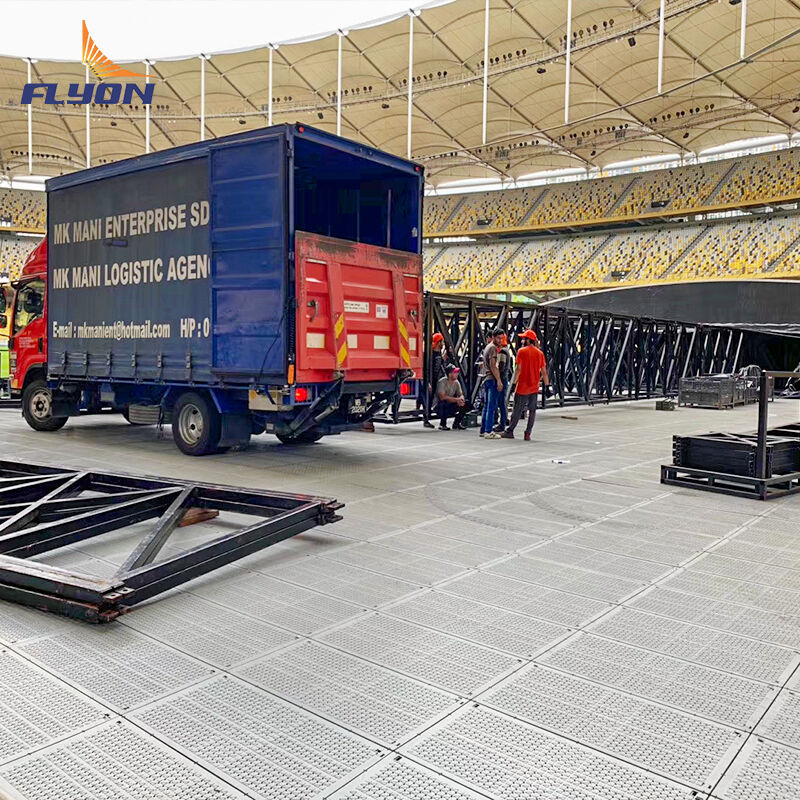
Turf protection systems made from modular panels address a big problem for sports facilities that host multiple events: they let venues change quickly without damaging the playing surface. These interlocking panels are built to meet strict standards for vibration control (ISO 10816-3) and impact resistance (ASTM F355). When installed properly, they spread out heavy loads so the grass underneath stays intact. This means no more patchy spots where infill has shifted or fibers get compressed. According to Facility Management Report data from last year, places using these systems save about 40% on labor costs when switching between events. A whole football field can be transformed into a concert venue within six hours flat, all while keeping safety standards intact. What's really important is how these panels work during actual events too. They shield busy areas like sidelines, goal posts, and equipment storage locations from wear and tear. This cuts down on cleanup time after games or shows by as much as two thirds. The result? Sports fields stay in good condition whether hosting NCAA tournaments or community festivals, and the overall lifespan of the turf gets extended significantly.
Hybrid Turf Systems and Evidence-Based Injury Prevention Through Turf Protection
ACL and concussion risk reduction: correlating hybrid turf design with sport-specific biomechanical data
Hybrid turf combines synthetic materials with real grass roots and actually helps prevent injuries based on how our bodies move. Research published in journals like British Journal of Sports Medicine last year and American Journal of Sports Medicine in 2022 shows these surfaces cut down dangerous rotational forces by around 15 to 28 percent when athletes make quick turns or cuts. This reduction translates into fewer non-contact ACL injuries for soccer players and footballers alike. When it comes to head impacts, hybrid fields keep G-Max readings under 165 even as temperatures swing from freezing cold at 30 degrees Fahrenheit all the way up to scorching hot 100 degrees. Traditional synthetic fields with infill tend to go over safe limits once temps hit about 85 degrees. Looking at rugby and American football statistics reveals another benefit: hybrid turf absorbs about 30% more kinetic energy during tackles and scrums because of the way natural roots work together with the artificial support system underneath. All these advantages come from deliberate engineering choices rather than just luck, which is why many sports facilities now consider hybrid turf an essential part of their overall player safety plans.
FAQ
What are the high-stress zones on sports fields?
High-stress zones on sports fields include the pitcher's mound in baseball, penalty spots in soccer, and sidelines where players frequently move and equipment is stored.
How do different sports affect turf wear and maintenance?
NFL fields experience heavy cleat rotation damage, FIFA soccer fields deal with sliding friction, and NCAA fields face compaction fatigue due to multiple sport use.
What role does infill play in turf protection?
Infill materials control temperature, water management, and player safety, providing cooling, drainage, and shock absorption to reduce injury risk and maintain field conditions.
How do modular turf protection solutions work?
Modular turf protection solutions use interlocking panels to allow quick reconfiguration for different events, protecting the turf from damage and reducing maintenance costs.