 EN
 AR
 FR
 PT
 RU
 ES
 BG
 HR
 CS
 DA
 NL
 FI
 DE
 EL
 HI
 IT
 JA
 KO
 NO
 PL
 RO
 SV
 CA
 TL
 ID
 SR
 SK
 UK
 VI
 HU
 TH
 TR
 MS
 AZ
 KA
 BN
 LO
 MN
 MY
 UZ


 EN
What Are the Advantages of Rubber Ground Protection Mats?
Rubber ground protection mats solve a different problem from turf matting. Where grass protection distributes load to protect a living surface, rubber ground protection mats manage the interface between traffic and hard ground: walkways that must stay safe in rain, work zones that must tolerate dropped tools and heavy footfall, and event areas where comfort and footing matter as much as durability. Two properties define the category. Non-slip surfaces maintain traction underfoot and under tires when conditions turn wet or contaminated, and shock absorption cushions impact for people, equipment, and the surface beneath. Neither property is optional in the applications where rubber ground protection mats earn their cost.
Real-World Industry Case / Scenario
A Construction Site's Access Road Upgrade
A construction site with heavy vehicle movement across shared access roads faced recurring problems: ruts in the soft shoulder, vehicles tracking mud onto public roads, and slip incidents for pedestrians crossing the site entrance in wet weather. The site installed rubber mats along the access route and at pedestrian crossing points. Vehicle tracking dropped because the mats provided a stable surface that did not pump mud, and pedestrian crossing points became safer as the mat surface maintained traction in rain. The site's safety log recorded no further slip incidents at the crossings over the following year.
The same properties drive use beyond construction. Event operators deploy rubber mats at entrances, catering areas, and equipment zones where spills and foot traffic combine, and equestrian facilities use them at mounting areas and wash stalls where water and hooves meet. In each case the mat absorbs impact, maintains footing on wet surfaces, and protects the ground beneath from concentrated wear. The versatility of rubber ground protection mats comes from the material rather than from design cleverness: rubber grips when wet, cushions under impact, and tolerates weather that would embrittle plastics.
Risk & Failure Mode Analysis
Slip Performance and Mat Movement
Non-slip performance is not permanent. The mats polish smooth under repeated traffic, oil and grease contamination reduces friction, and ice defeats most surface textures. Mats that shift under load create their own hazard, because a moving mat at a crossing point is worse than no mat. The controls are straightforward: select surface textures matched to the expected contamination, clean contamination promptly, and secure rubber ground protection mats against movement through weight, interlock, or edge fixing. Where ice is a seasonal certainty, surface selection and maintenance intensity should reflect that reality rather than hope.
Rubber weathers through ozone and ultraviolet exposure, which surface-cracks and hardens the material over years. Freeze-thaw cycles open micro-cracks that grow under load, and chemical exposure from fuels, solvents, and site chemicals degrades some compounds faster than others. Heavy point loads, such as steel dunnage dropped repeatedly, tear and puncture mat surfaces. The mitigation is specification and inspection: rubber ground protection mats with compounds rated for the expected exposure, and inspection intervals that catch cracking and delamination before a mat fails under traffic.
Technical Principles & Standard Compliance
Rubber Compounds and Friction
Rubber ground protection mats are commonly produced from recycled tire rubber, styrene-butadiene rubber, or ethylene propylene diene monomer compounds, each with different friction, weathering, and chemical profiles. Surface texture, whether ribbed, studded, or coin-patterned, provides the macro-texture that channels water away from the contact patch and maintains traction. The coefficient of friction under wet conditions is the performance figure that matters for rubber ground protection mats, and it should be requested from suppliers rather than inferred from appearance. Walking surface expectations in occupational settings, including OSHA guidance on slip-resistant walking surfaces, frame the safety case for specification.
Shock Absorption and Drainage Design
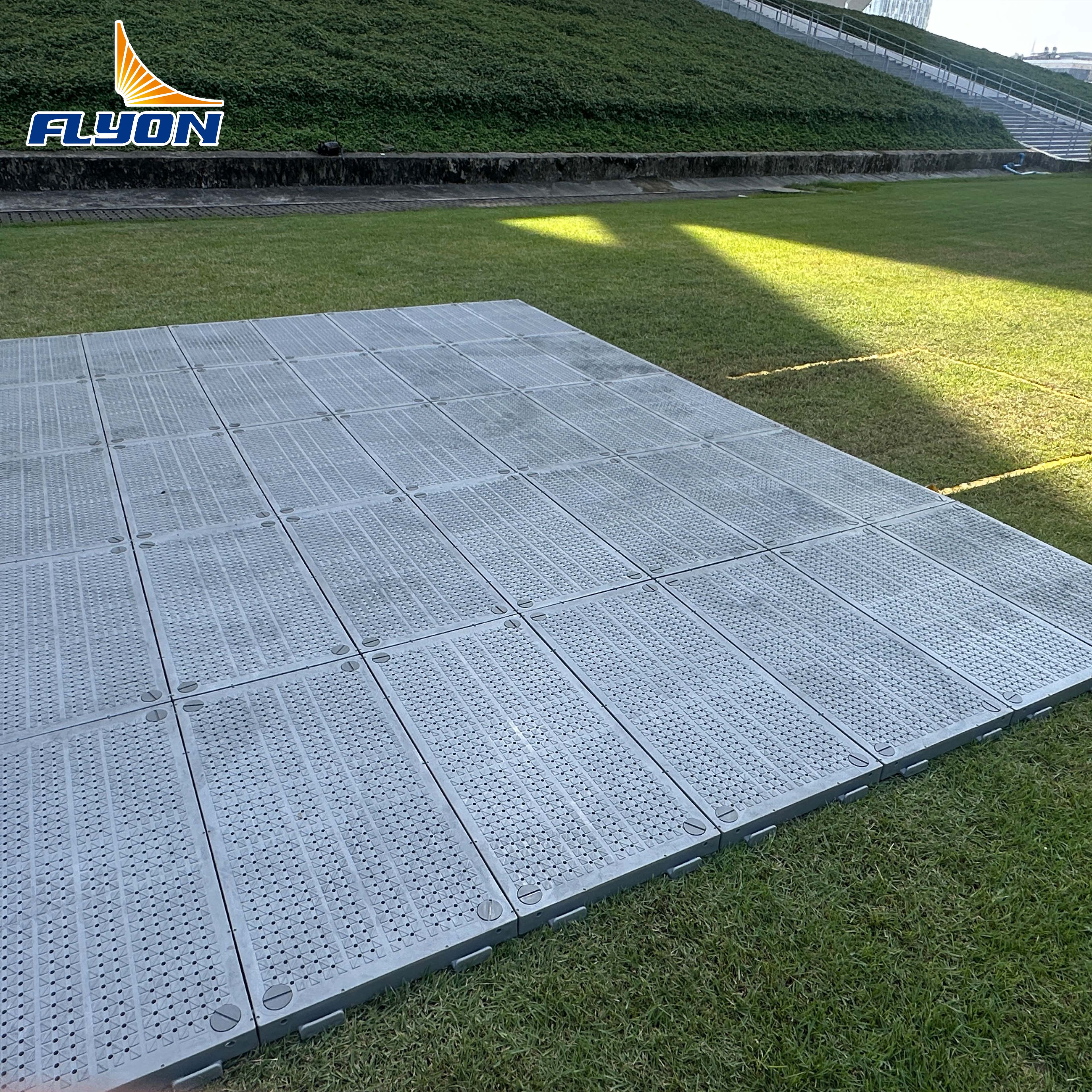
Shock absorption comes from the material's elasticity: rubber ground protection mats deform under impact and return, dissipating energy that a rigid surface would transmit. The same elasticity cushions dropped equipment and reduces fatigue for personnel standing on the mat through long shifts. Drainage design completes the function, since a mat that holds water on its surface recreates the slip hazard it was installed to prevent. Channeled or perforated rubber ground protection mats move water away from the walking surface, and installation slope should direct water toward drainage rather than trapping it beneath the mat.
Actionable Buyer & Maintenance Guide
Choosing Rubber Ground Protection Mats
Selection should begin with the failure the mat prevents. Wet crossing points need high wet friction and secure fixing; work zones need impact resistance and chemical tolerance; event areas need comfort underfoot and spill tolerance; equipment zones need puncture and tear resistance. Thickness trades handling weight against cushioning, and surface texture should match the expected contamination. Verification includes supplier friction data for wet conditions, compound weathering ratings, and, where possible, a trial period in the actual environment. Suppliers such as Shenzhen-based Flyon Sport provide compound and texture data that allow rubber ground protection mats to be matched to duty rather than chosen on appearance.
Cleaning and Inspection
Maintenance for rubber ground protection mats is cleaning and inspection. Contamination should be removed promptly, since oil and grease degrade friction faster than traffic wears the surface. Mats should be lifted periodically where installation permits, so the ground beneath can dry and the mat's underside can be inspected. Surface cracking, delamination, and hardening are the retirement criteria for rubber ground protection mats, since a hardened mat has lost the elasticity that provides both cushioning and grip. Recording mat condition against service life gives operations teams the data to replace on evidence rather than on appearance.
Frequently Asked Questions
Question 1: What makes rubber mats non-slip?
Answer: Rubber maintains grip when wet because the material itself is elastic and high-friction, and surface textures such as ribs or studs channel water away from the contact patch. Performance depends on compound and texture, and wet coefficient of friction is the figure that should be requested from suppliers for rubber ground protection mats. Surfaces polish under traffic and contamination reduces friction, so cleaning and eventual replacement are part of maintaining the non-slip performance.
Question 2: How do rubber mats absorb shock?
Answer: The material's elasticity does the work. Rubber ground protection mats deform under impact and return to shape, dissipating energy that a rigid surface would transmit into feet, equipment, or the ground beneath. Thickness increases the cushioning effect, which is why standing areas and equipment zones use heavier sections than simple crossing points. The same elasticity that cushions also reduces fatigue for personnel working on rubber ground protection mats through long shifts.
Question 3: How long do rubber ground protection mats last outdoors?
Answer: Service life depends on compound, exposure, and load. Ozone and ultraviolet exposure surface-crack and harden rubber over years, freeze-thaw cycles open micro-cracks, and chemical exposure degrades some compounds faster than others. Rubber ground protection mats rated for outdoor weathering with appropriate compounds deliver years of service, and inspection for cracking, hardening, and delamination determines retirement better than any calendar interval.
Question 4: Where are rubber mats a better choice than turf protection mats?
Answer: Rubber ground protection mats suit hard-ground applications: walkways, work zones, event areas, entrances, and equipment pads where the surface beneath is pavement, compacted aggregate, or bare ground. Turf protection mats are designed to distribute load over living grass and typically prioritize permeability. Choosing between them depends on whether the surface being protected is alive or built, and on whether the priority is footing and cushioning or load distribution.