 EN
EN
 AR
AR
 FR
FR
 PT
PT
 RU
RU
 ES
ES
 BG
BG
 HR
HR
 CS
CS
 DA
DA
 NL
NL
 FI
FI
 DE
DE
 EL
EL
 HI
HI
 IT
IT
 JA
JA
 KO
KO
 NO
NO
 PL
PL
 RO
RO
 SV
SV
 CA
CA
 TL
TL
 ID
ID
 SR
SR
 SK
SK
 UK
UK
 VI
VI
 HU
HU
 TH
TH
 TR
TR
 MS
MS
 AZ
AZ
 KA
KA
 BN
BN
 LO
LO
 MN
MN
 MY
MY
 UZ
UZ


 EN
EN
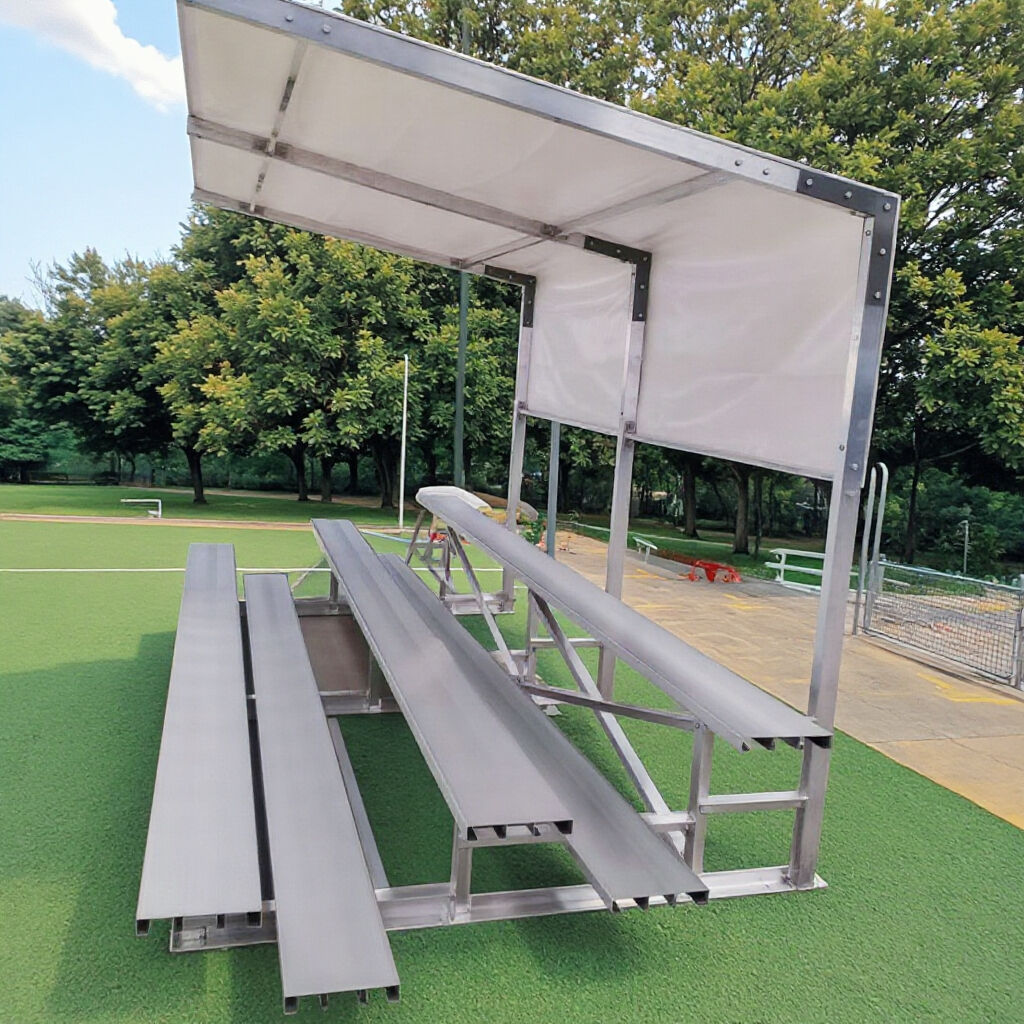
Why Aluminum Portable Bleachers Are the Practical Seating Choice
Steel bleachers rust. Wood bleachers rot and require annual refinishing. Concrete bleachers are permanent — once poured, the field configuration cannot change. Aluminum portable bleachers address all three: they do not corrode outdoors, need essentially zero structural maintenance, and move between fields, store off-season, or reconfigure as needs change. For schools and sports complexes with seasonal usage, portable bleachers make the facility flexible.
Lightweight, Corrosion-Resistant, and Rapid to Deploy
Aluminum portable bleachers weigh approximately 60% less than equivalent steel units. A five-row, 15-foot aluminum unit — typically 350 to 500 pounds — is movable by two people with a tip-and-roll mechanism. The structural aluminum alloy (6061-T6 or 6063-T6) forms a natural oxide layer that halts corrosion without paint or galvanizing. In coastal environments where salt spray attacks steel within years, aluminum remains sound for decades. Setup from transport position to spectator-ready takes under 10 minutes.
Real-World Case — A Multi-Field Sports Complex Standardizes on Portability
An Australian municipal sports complex with four soccer fields, two rugby pitches, and a cricket oval previously maintained 12 permanent steel bleachers at a maintenance cost exceeding AUD 25,000 annually — rust treatment, bolt replacement, and repainting consumed the bulk of the budget. The complex replaced them with 16 aluminum portable bleachers from Flyon Sport — 10 five-row units seating 50 each, 6 three-row units seating 30 — all mounted on tip-and-roll frames. Units are stored under cover during the off-season and deployed to whichever fields are hosting matches each weekend. Annual maintenance dropped to approximately AUD 3,000 — bolt inspection and occasional deck board replacement — and the flexibility to concentrate seating at the weekend's busiest fields meant the complex needed fewer total seats than with permanent installations.
Key Applications for Portable Bleachers
School Athletics, Community Events, and Tournament Venues
Schools with seasonal sports — football in autumn, soccer in spring, track in summer — benefit from portable bleachers moving to the field in use. Community events need spectator seating for a weekend, not a decade — deploy Friday, store Monday. Tournaments with variable spectator numbers add or remove capacity by deploying additional portable units. Temporary installations — training, emergency staging — use portable bleachers as rapidly deployable audience seating.
Structural Features That Define Quality
Frame, Decking, Guardrails, and Tip-and-Roll Mobility
Quality aluminum portable bleachers start with a welded 6061-T6 aluminum box-section frame with triangulated bracing that resists racking when the unit is moved across uneven ground. Decking — the walking and seating surface — should be extruded aluminum planks with a ribbed or serrated surface profile for slip resistance when wet; anodized decking adds surface hardness and UV resistance for long-term appearance. Guardrails at the rear and sides of elevated rows — required by most building codes for units above three rows — should be aluminum with continuous top and mid rails. The tip-and-roll mechanism — integrated wheels and a balanced pivot point — must allow one person to tip the unit onto its wheels without exceeding 25 kg of lift force at the handle.
Selecting Portable Bleachers for a Facility
Five Factors Before Purchase
First, seating capacity — determine maximum spectator count and select portable bleachers combinable for large events or splittable across fields. Second, row count — three-row for ground-level viewing, five-row for elevated sightlines. Third, transport method — tip-and-roll for manual, forklift-compatible for vehicle, trailer-mounted for road transport. Fourth, storage — covered storage extends decking and fastener life. Fifth, code compliance — guardrails, aisle width, maximum row count. Flyon Sport provides specification support across these factors.
Frequently Asked Questions
What are the advantages of aluminum portable bleachers over steel?
Aluminum portable bleachers weigh 60% less than steel, do not rust, and need minimal maintenance beyond annual bolt inspection. In coastal environments, aluminum outlasts steel by decades. Flyon Sport manufactures aluminum bleachers for permanent outdoor durability.
How are portable bleachers moved between fields?
Most aluminum portable bleachers use a tip-and-roll mechanism — integrated wheels and a balanced pivot allowing one or two people to tip and roll the unit to a new location. Heavier units use forklift pockets or trailer mounts.
How long do aluminum bleachers last outdoors?
Aluminum portable bleachers with 6061-T6 structural alloy frames and anodized extruded aluminum decking typically last 20 to 30 years in outdoor exposure with annual bolt torque inspection and occasional deck board replacement. In coastal environments where salt spray corrodes galvanized steel within 8 to 12 years, aluminum's natural oxide passivation layer provides decades of service without coating maintenance.
What maintenance do portable bleachers require?
Aluminum portable bleachers require annual bolt torque inspection on all structural connections, deck board condition check for cracking or excessive wear, guardrail integrity verification including mid-rail and top rail securement, and wheel and pivot mechanism lubrication. No painting, rust treatment, or wood refinishing is needed — the primary maintenance cost difference versus steel or wood bleachers.
How many rows are typical for portable bleachers?
Three-row portable bleachers suit ground-level viewing. Five-row units seat 50 to 60 with elevated sightlines. Units above five rows typically require fixed anchoring rather than portable deployment.
Can portable bleachers be used indoors?
Yes, aluminum portable bleachers work well in indoor sports halls, field houses, and multi-purpose event venues. The tip-and-roll mobility allows rapid floor reconfiguration between basketball tournament seating, volleyball match viewing, graduation assembly layouts, and concert audience arrangements — without permanent installation or floor anchoring that would limit space flexibility.