 EN
EN
 AR
AR
 FR
FR
 PT
PT
 RU
RU
 ES
ES
 BG
BG
 HR
HR
 CS
CS
 DA
DA
 NL
NL
 FI
FI
 DE
DE
 EL
EL
 HI
HI
 IT
IT
 JA
JA
 KO
KO
 NO
NO
 PL
PL
 RO
RO
 SV
SV
 CA
CA
 TL
TL
 ID
ID
 SR
SR
 SK
SK
 UK
UK
 VI
VI
 HU
HU
 TH
TH
 TR
TR
 MS
MS
 AZ
AZ
 KA
KA
 BN
BN
 LO
LO
 MN
MN
 MY
MY
 UZ
UZ


 EN
EN
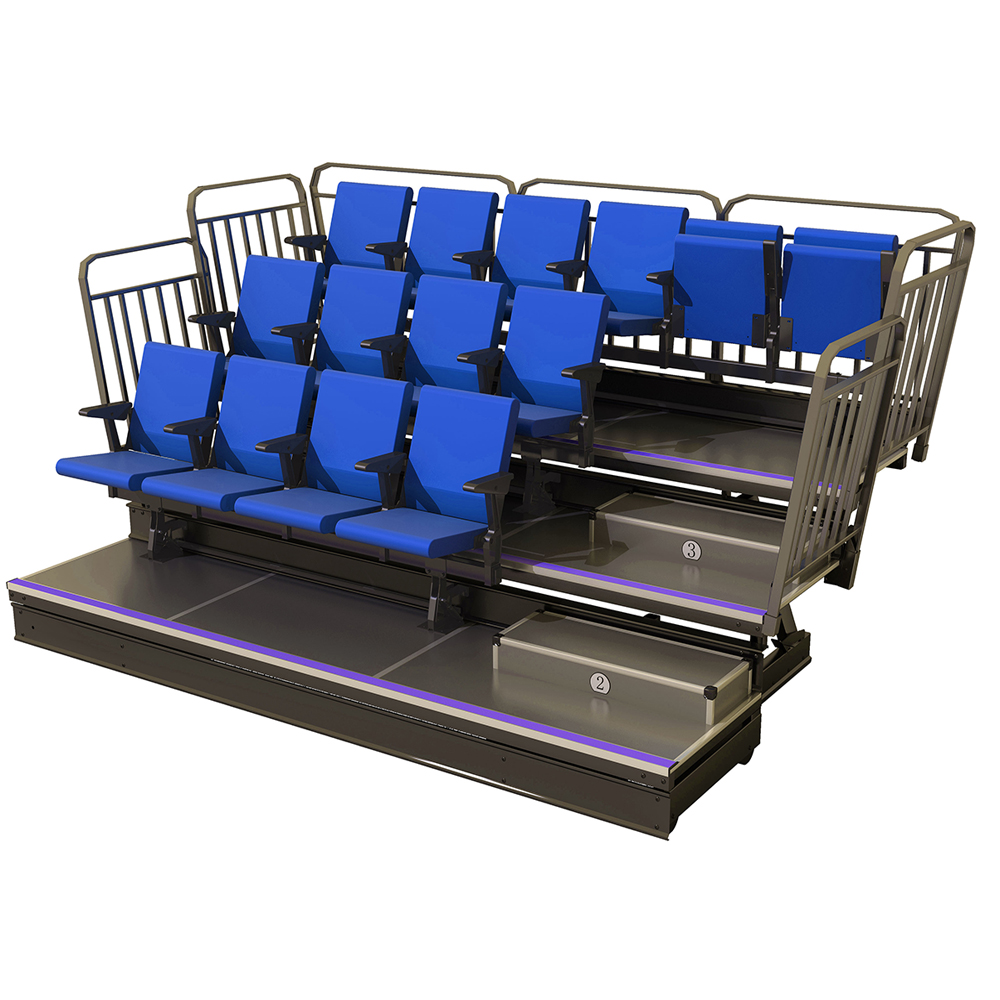
Selecting indoor sports facilities infrastructure requires balancing spectator safety, longevity, and capital expenditure. Procurement managers often face tight budgets, making installation labor costs a critical factor. Implementing efficiently engineered gymnasium bleachers reduces assembly hours and minimizes setup downtime, allowing project planners to optimize facility budgets and spectator experiences.
Managing Total Cost of Ownership in Facility Seating
Facility upgrades often encounter unexpected expenses. Labor costs inflate expenditures, but modular designs mitigate these variables.
The Financial Impact of Complex Gymnasium Bleachers
Traditional fixed seating demands weeks of specialized labor and precise field alignment. When choosing gymnasium bleachers, evaluating assembly ease alters the project financial trajectory. Prefabricated components eliminate reliance on specialized local contractors, allowing general mechanical teams to execute setup smoothly, avoiding prolonged project delays and keeping facility managers within strict fiscal allocations.
Hidden Challenges in On-Site Assembly and Labor
An athletic complex upgrade highlights traditional procurement risks. Facing a strict two-week window for a tournament, conventional heavy-steel gymnasium bleachers required extensive field welding, risking major delays. Selecting a retractable bleachers configuration with a bolt-together layout eliminated hot-work permits. The telescopic seating system was deployed in five days, opening on schedule and reducing installation labor costs, proving that manufacturing design improves operational efficiency.
Technical Architecture of Modern Modular Seating
High-performance seating delivers durability without complex setup procedures. Examining structural logic reveals how ease of installation coexists with load-bearing capabilities.
Structural Integrity and Engineering Frameworks
Modern gymnasium bleachers feature a high-tensile steel understructure distributing weight evenly across venue floors. Computerized numerical control manufacturing ensures interlocking frames align perfectly without forced on-site assembly, reducing stress. Non-marking polyurethane floor protection wheels prevent damage to expensive hardwood surfaces during operation. Connection points utilize specialized locking fasteners instead of field welding, maintaining structural integrity while simplifying setup.
Smart Mechanisms for Retractable Facility Management
Telescopic systems utilize synchronized row-locking mechanisms that ensure straight movement during deployment, preventing binding or jamming. Friction-free guide rails and heavy-duty power tractors drive systems with minimal mechanical resistance. This smooth operation relies on factory calibration, meaning on-site teams simply anchor tracking rails correctly, reducing human error risks during assembly.
Safety Standards Compliance for Public Assembly
Public seating must withstand immense dynamic loads during high-energy athletic events. Structural designs must align strictly with international building codes and standards, like the International Building Code and ICC 300, which govern spectator safety. These regulations dictate specific aisle widths and guardrail heights for gymnasium bleachers. Compliant systems integrate automated boundary railings and self-locking deck boards to eliminate gaps, minimizing trip hazards. Verifying systems through certified testing bodies ensures compliance without costly modifications.
Strategic Selection and Operational Maintenance
Securing long-term value from facility infrastructure requires a proactive approach to selection, routine checkups, and everyday care. Proper stewardship preserves structural components and protects the venue investment.
Practical Guidelines for Facility Managers
Procurement officers should request detailed drawings and verify floor load capacities beforehand. Aligning configurations with specific sports ensures unobstructed sightlines, while prioritizing modular options minimizes downtime. Selecting systems with integrated electrical friction drives simplifies daily operation, reducing manual labor.
Inspection and Long-Term Performance Preservation
Establishing a rigorous maintenance schedule keeps spectator seating safe and operational. Semi-annual inspections focus on tightening fasteners, checking track alignment, and verifying emergency stop sensors. Debris accumulates within understructure channels, so regular vacuuming prevents mechanical obstructions. Lubricating moving hinges and inspecting polyurethane wheels ensures consistent performance, ensuring the gymnasium bleachers remain a safe, dependable asset for public use.
Efficient resource management transforms athletic spaces. Prioritizing quick-assembly engineering and modular parts reduces initial overhead while gaining operational flexibility. Sourcing gymnasium bleachers secures a high-performing system that meets safety regulations and stands up to decades of rigorous public use.
Frequently Asked Questions
What factors influence the installation time of retractable gymnasium bleachers?
The total installation timeframe depends heavily on the pre-assembly level of structural components and factory alignment precision. Systems engineered with interlocking modular steel frameworks completely eliminate the need for field welding or complex on-site adjustments. This allows general mechanical assembly teams to finish configuration quickly, reducing labor hours and minimizing venue operational downtime.
Why is floor protection critical when selecting indoor sports facilities seating?
Heavy indoor seating structures can scratch, dent, or warp expensive hardwood or synthetic sports floors during repetitive daily operations. Utilizing wide, non-marking polyurethane wheels effectively distributes crowd weight across surfaces. This structural choice prevents deep gouges and structural surface damage, safeguarding valuable facility assets during ongoing opening and closing cycles.
How do building codes impact the configuration of public seating?
National building codes and ICC 300 standards impose safety mandates regarding emergency evacuation pathways, step heights, aisle dimensions, and guardrail load capacities. Adhering to these strict structural parameters during the design phase ensures absolute spectator safety, prevents venue liability issues, and guarantees passing municipal inspections without requiring expensive field modifications.
Can existing facility staff operate modern telescopic seating systems?
Yes, contemporary indoor seating systems featuring automated electrical friction drives are engineered specifically for safe, straightforward operation. Facility maintenance personnel can deploy or retract multi-row seating banks safely using a basic handheld control pendant. This automation completely removes strenuous manual labor, accelerates room reconfigurations, and reduces workplace operational safety risks.
When should a facility establish a professional maintenance schedule?
A comprehensive preventative care program must begin immediately following the initial structural inspection and handoff. Routine visual checkups should occur before every major tournament, whereas deep technical inspections focusing on structural fastener torque, tracking wheel alignment, and safety sensor validation must be conducted twice per year to ensure public safety.
Which structural materials offer the best balance of durability and ease of installation?
High-tensile galvanized steel understructures paired with high-density polyethylene or aluminum seating modules offer the ultimate industrial combination. This specialized material choice provides maximum load resistance against heavy dynamic crowd forces while keeping individual component weights manageable for fast, straightforward, and highly cost-effective on-site mechanical assembly processes.