 EN
EN
 AR
AR
 FR
FR
 PT
PT
 RU
RU
 ES
ES
 BG
BG
 HR
HR
 CS
CS
 DA
DA
 NL
NL
 FI
FI
 DE
DE
 EL
EL
 HI
HI
 IT
IT
 JA
JA
 KO
KO
 NO
NO
 PL
PL
 RO
RO
 SV
SV
 CA
CA
 TL
TL
 ID
ID
 SR
SR
 SK
SK
 UK
UK
 VI
VI
 HU
HU
 TH
TH
 TR
TR
 MS
MS
 AZ
AZ
 KA
KA
 BN
BN
 LO
LO
 MN
MN
 MY
MY
 UZ
UZ


 EN
EN
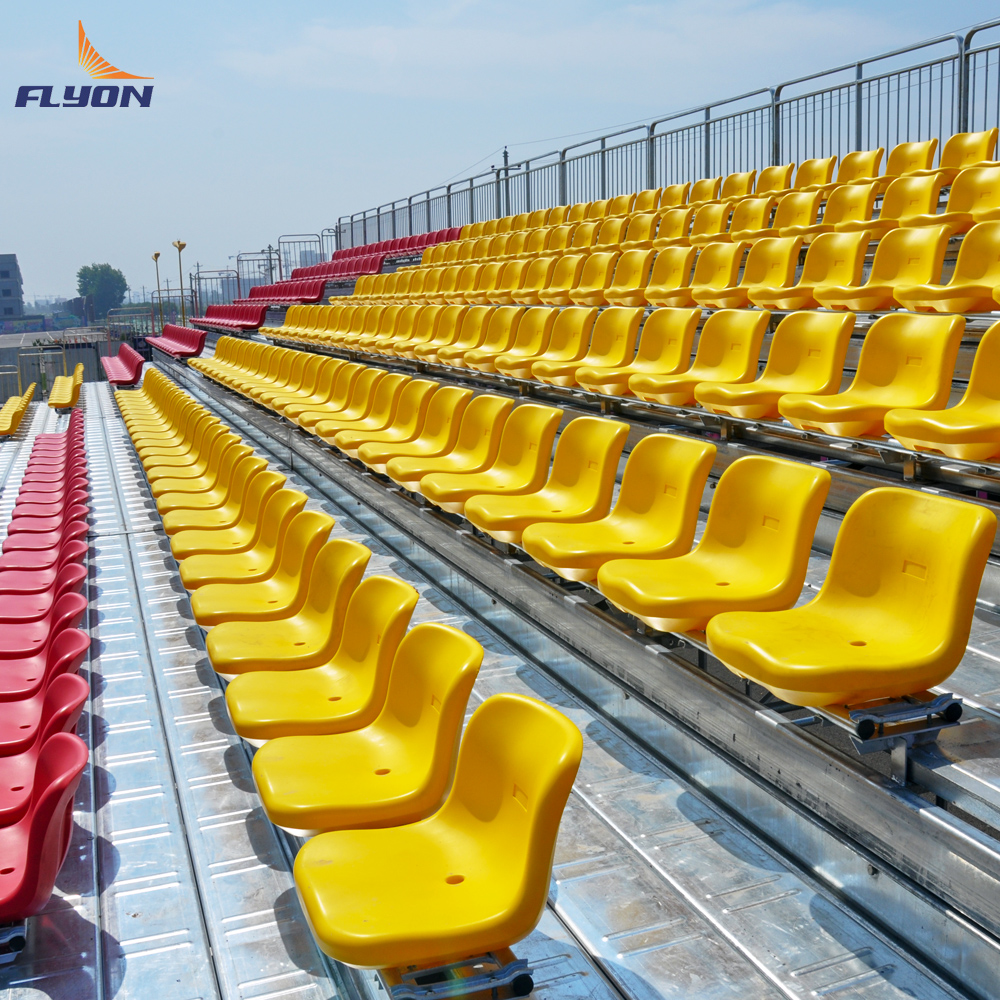
The Space Optimization Function of Retractable Seating
Multi-purpose venues face an economic equation that fixed seating cannot solve. Basketball competition needs 3,000 seats courtside. A trade exhibition three weeks later needs flat floor with zero fixed seating. A school assembly needs 800 seats for six hours then cleared for physical education. Gymnasium bleachers retracting into wall pockets or nesting into collapsed rows provide the capacity flexibility making multi-use venues viable.
The mechanism transforms seating from space consumer into deployable asset. Retracted, the system occupies 1.5–2.5 meters of wall depth — space unusable for sports regardless. Extended, it projects 6–15 meters into the hall, creating the tiered seating sight-line geometry demands.
A Canadian university specified retractable gymnasium bleachers after analyzing utilization showing the space hosted athletics 30% of hours and non-seating activities — exams, career fairs, banquets — for 70%. Retractable seating enabled both uses, generating event revenue fixed seating would have eliminated.
Drive Mechanism Selection
Manual Operation
Manual bleachers use worm-gear drives through a crank handle or chain loop. The operator rotates the input, turning a shaft with chain-and-sprocket linkages extending all rows simultaneously. Manual suits venues with infrequent changes — weekly rather than daily deployment. Operation speed of 0.5–1.0 meters per minute means roughly 10–20 minutes per 10-meter section.
The simplicity advantage is meaningful: no motors to fail, no electrical connections, no control system. Manual bleachers operate during power outages — relevant for regions with unreliable supply or emergency retraction scenarios.
Electric Drive Systems
Powered bleachers use motors at each section driving extension through gear reducers. Push-button controls deploy the entire system in 3–8 minutes. Safety features include pressure-sensitive leading edges stopping extension on obstacle contact and optional light curtains across the deployment zone.
Motor cost adds 30–50% to base price but eliminates the labor friction causing manual bleachers to remain permanently extended where staff considers deployment time prohibitive.
Structural and Safety Features
Row Rise and Sight-Line Geometry
Row rise of 200–250mm with tread depth of 750–850mm produces sight-line clearance for viewing a performance surface at court level 10–20 meters from the front row. The geometry determines bleacher extension depth: a 10-row configuration at 800mm tread extends 8 meters regardless of hall width. Venues with limited depth must accept fewer rows or specify steeper profiles.
Guardrail and Aisle Requirements
Guardrails must meet 1,100mm height and 100mm gap requirements. The challenge unique to retractable systems is the gap between bleacher guardrail and wall pocket — a self-adjusting or manually positioned infill must close this opening as the bleacher extends.
Aisle width minimum of 1,100mm applies for aisles serving more than 60 seats. Retractable bleachers incorporate fold-down stair sections deploying with seating rows, providing consistent walking surface angle without separate setup steps.
Floor Loading
Retractable bleachers concentrate entire structural load onto linear meters of floor contact along the wall. Floor structure beneath must resist 500–750 kg per linear meter for a 10-row system under occupancy. Concrete slab-on-grade handles this inherently. Suspended floors require structural verification that slab design accommodates bleacher loading.
Frequently Asked Questions
How much floor space do retracted bleachers occupy?
Retracted systems occupy 1.5–2.5 meters of wall depth depending on row count. A 10-row system nests into under 2 meters. Shenzhen Flyon Sports designs retractable bleachers for venues from school gymnasiums to professional arenas.
Can retractable bleachers be operated by one person?
Motorized systems enable single-operator push-button deployment. Manual systems can be operated by one person, though time increases — approximately 10–20 minutes per section. Multiple sections require sequential or multi-operator operation.
What is the maximum number of rows for retractable bleachers?
Standard designs accommodate 10–20 rows. Beyond 20 rows, retraction depth increases until ceiling height and upper-row headroom become limiting. Taller configurations require structural tie-backs, moving into semi-permanent rather than true retractable category.
How long does a retractable bleacher system last?
Properly maintained systems deliver 25–35 years. Limiting components are drive bearings, chain-and-sprocket wear surfaces, and rolling elements. Motorized systems add control component replacement at 15–20 years. Annual lubrication extends mechanism life.
What safety features prevent retractable bleachers from extending onto obstacles?
Motorized systems incorporate pressure-sensitive leading edges and optional light curtains stopping on detection. Manual systems rely on operator observation. Pre-deployment sweep procedures verifying clear deployment zones supplement mechanical features.
Can retractable bleachers be installed in existing buildings?
Yes, provided the floor structure accommodates concentrated wall loading. Structural analysis determines reinforcement requirements. Wall attachment and electrical supply complete installation. Suspended floors require more rigorous verification than slab-on-grade. Shenzhen Flyon Sports provides pre-installation engineering review including load calculations for retrofit projects.
What maintenance do retractable bleacher mechanisms require?
Monthly lubrication of drive chains, sprockets, and bearing points. Quarterly inspection of roller condition, telescoping section alignment, and electrical control systems. Annual comprehensive service including motor contactor inspection, structural bolt torque verification, and guardrail system integrity check. Maintenance records document ongoing safety compliance and support warranty claims if mechanism issues develop. Neglected lubrication accelerates wear on the components carrying the entire extension and retraction load.