 EN
EN
 AR
AR
 FR
FR
 PT
PT
 RU
RU
 ES
ES
 BG
BG
 HR
HR
 CS
CS
 DA
DA
 NL
NL
 FI
FI
 DE
DE
 EL
EL
 HI
HI
 IT
IT
 JA
JA
 KO
KO
 NO
NO
 PL
PL
 RO
RO
 SV
SV
 CA
CA
 TL
TL
 ID
ID
 SR
SR
 SK
SK
 UK
UK
 VI
VI
 HU
HU
 TH
TH
 TR
TR
 MS
MS
 AZ
AZ
 KA
KA
 BN
BN
 LO
LO
 MN
MN
 MY
MY
 UZ
UZ


 EN
EN
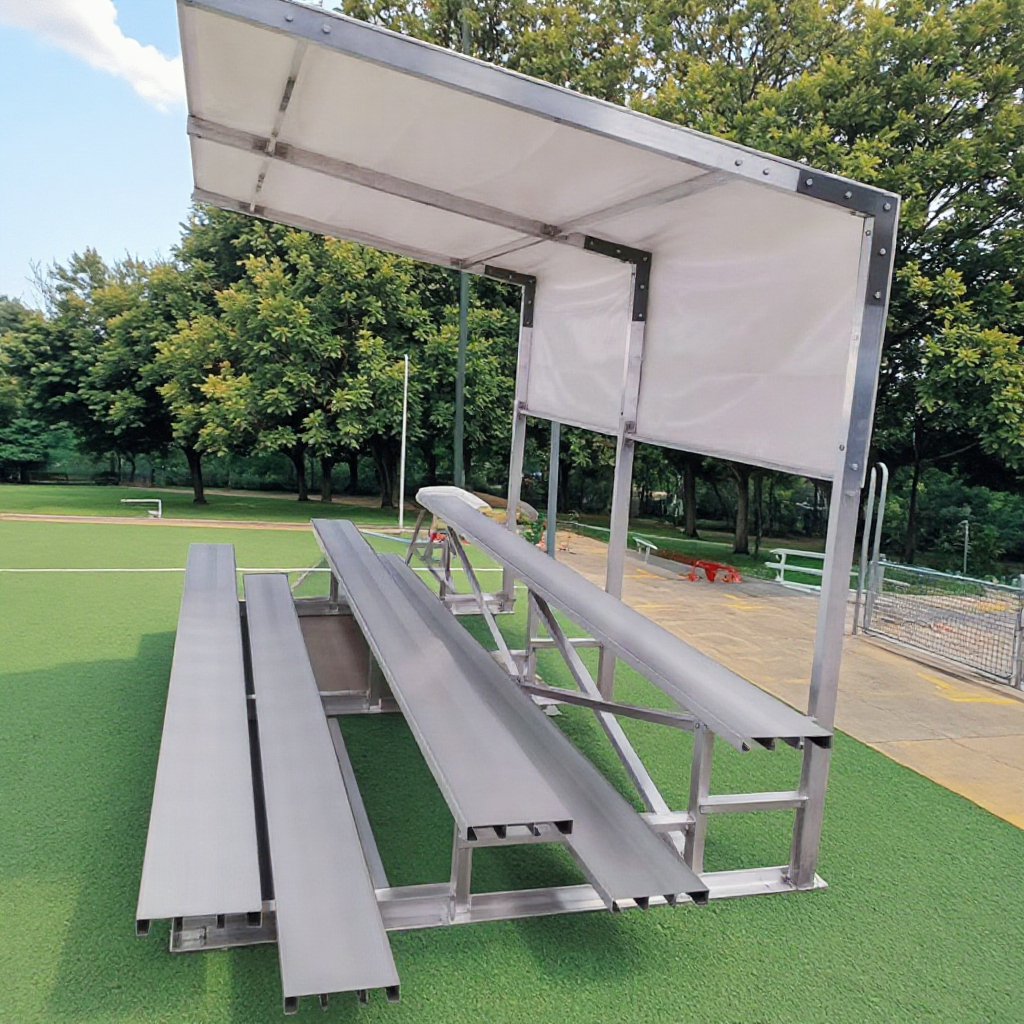
Why Safety Engineering Defines Bleacher Design
Portable bleachers deploy for seasonal events and temporary capacity expansion, then relocate when venues return to baseline configuration. Portability introduces challenges absent from permanently anchored grandstands — the entire assembly must resist wind uplift, occupant vibration, and accidental impact without foundation connections.
Safety railings transform bleachers from elevated platforms into occupancy-ready structures. Without guardrails, even a five-row bleacher at approximately 1.5 meters above ground exceeds the threshold where fall protection becomes mandatory. The railing prevents falls, guides spectator movement, and creates the enclosure preventing unease on open-edged elevated platforms.
A high school in Texas deployed portable aluminum bleachers with integrated guardrails for track season. During a regional championship with double normal attendance, the railing channeled crowd flow through designated aisles rather than allowing spectators to climb seat backs — behavior observed the prior season with unrailed units. The event recorded zero crowd incidents versus three minor injuries the previous year.
Railing System Engineering
Structural Integration
The fundamental distinction separates systems where railing integrates into the primary load path from those where railings attach as secondary accessories. Integrated systems transfer the 90 kg horizontal guardrail force through the same structural elements carrying occupant weight. Bolt-on railings rely on fasteners originally designed for seating loads only.
Integrated posts extend from vertical support columns with connections designed for full cantilever moment at rail height. Post spacing of 1.8–2.4 meters ensures rails resist required force without exceeding the 25mm deflection limit specified in building codes.
Rail Height and Gap Specifications
Guardrail height of 1,100mm above the standing surface aligns with IBC and EN 13200 standards, placing the rail above an adult's center of gravity. Intermediate rails at 550mm prevent smaller occupants from passing through. The gap between vertical balusters must not exceed 100mm — derived from child safety research — regardless of whether the bleacher is five rows or fifteen rows.
Material Selection
Aluminum dominates portable bleacher construction because weight reduction versus steel — approximately 65% lighter — directly enables portability. A five-row aluminum section at 300–400 kg is movable by a small crew. Steel at 800–1,000 kg requires mechanical handling undermining portability. Aluminum's corrosion resistance eliminates painting maintenance, operating advantage where budgets shrink while usage grows.
Deployment and Assembly Safety
Ground Preparation
Portable bleachers require ground supporting approximately 500 kg/m² under occupancy. Asphalt, compacted gravel, and concrete pads provide adequate capacity. Adjustable screw-jack feet compensate for up to 150mm of ground variation. The leveling procedure — starting from the highest point and adjusting downward — ensures the structure sits plumb.
Connection Verification
Each section connects through interlocking frames transferring lateral loads across the assembly. Pre-use inspection verifies all connections — a single missed pin concentrates sway forces on remaining connections, potentially exceeding capacity. Brightly colored locking pins and alignment marks reduce dependence on inspection diligence alone.
Frequently Asked Questions
What is the minimum safety railing height for portable bleachers?
International codes specify 1,100mm guardrail height above standing surface. This places the barrier above an adult's center of gravity. Intermediate rails at 550mm prevent smaller occupants passing through. Shenzhen Flyon Sports supplies bleacher systems with integrated guardrails meeting IBC and EN 13200 specifications.
How many rows of portable bleachers can be installed without permanent foundations?
Systems up to 10–15 rows operate without foundations when designed with adequate base width-to-height ratio. Beyond 15 rows, overturning moment from wind typically exceeds self-weight stabilizing moment, requiring ground anchors or ballast.
What prevents portable bleachers from tipping in strong wind?
Self-weight provides primary overturning resistance. Ballast at the base, wind-tensioned anchors for semi-permanent setups, and interlocking connections increasing effective footprint all contribute. Design wind speed should reflect local 50-year return-period data.
Can safety railings be added to existing portable bleachers?
Retrofit must verify the existing frame resists additional lateral guardrail loads. Bolt-on systems on seat brackets may not meet code if brackets were designed for vertical loads only. Consultation with the manufacturer or structural engineer is recommended.
How often should portable bleacher connections be inspected?
Pre-event inspection of every connection and guardrail component is standard. Annual comprehensive inspection examining structural members, welds, fasteners, and corrosion documents ongoing fitness. Records provide liability documentation for facility operators.
What ground surface is suitable for portable bleacher deployment?
Asphalt, concrete pads, and compacted gravel provide adequate bearing. Grass requires load-spreading pads under support points. Adjustable feet compensate for up to 150mm of variation. The surface must drain — standing water softens ground and increases settlement risk during occupancy. For installations exceeding one week, plywood or composite ground protection mats distribute loads and prevent the concentrated leg pressure that creates permanent depressions in turf or soft soil surfaces.
How are portable bleachers transported between venues?
Smaller systems of 3–5 rows can be moved manually by groundskeeper crews using integrated wheels and tow bars. Larger sections of 5–10 rows typically require forklift handling or trailer transport. Aluminum construction at 65% lighter than steel makes the difference between crew-portable and equipment-dependent movement. Sections should be stored on level ground with weather covers preventing debris accumulation in seat folds and hinge mechanisms during off-season storage.