 EN
EN
 AR
AR
 FR
FR
 PT
PT
 RU
RU
 ES
ES
 BG
BG
 HR
HR
 CS
CS
 DA
DA
 NL
NL
 FI
FI
 DE
DE
 EL
EL
 HI
HI
 IT
IT
 JA
JA
 KO
KO
 NO
NO
 PL
PL
 RO
RO
 SV
SV
 CA
CA
 TL
TL
 ID
ID
 SR
SR
 SK
SK
 UK
UK
 VI
VI
 HU
HU
 TH
TH
 TR
TR
 MS
MS
 AZ
AZ
 KA
KA
 BN
BN
 LO
LO
 MN
MN
 MY
MY
 UZ
UZ


 EN
EN
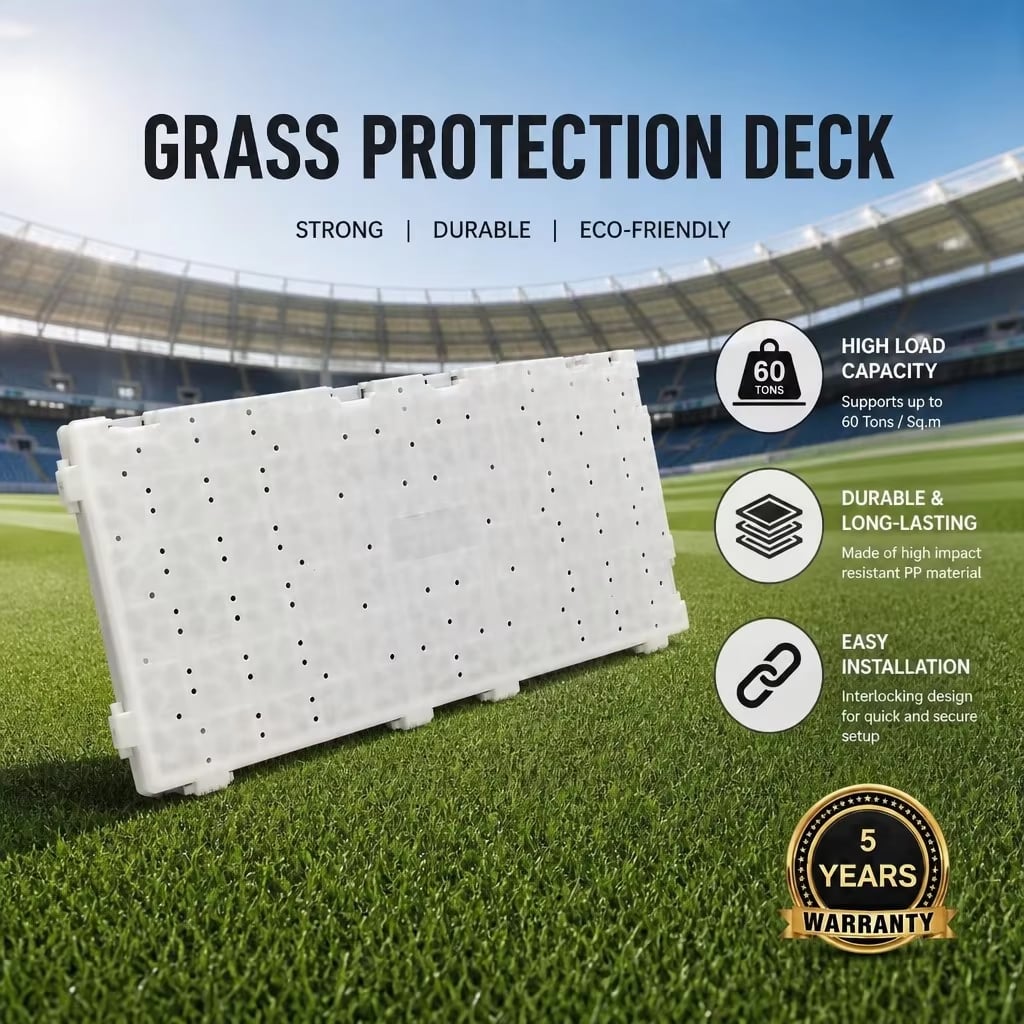
Why Weather Resistance Is Critical for Ground Protection Mats
The Cost of Failure: How Standard Mats Degrade in Freeze-Thaw Cycles and UV Exposure
Unlike ground protection mats engineered for all-weather use, standard alternatives often fail under repeated environmental stress. Freeze-thaw cycles cause moisture to infiltrate micro-cracks, expanding upon freezing and accelerating structural fatigue. A 2021 industry survey by the Modular Building Institute found that temporary access mats failing due to weather exposure incur average replacement costs of $12,500 per project phase. Below is a breakdown of common failure modes and their direct financial impact.
| Failure Mode | Typical Consequence | Estimated Cost Impact |
|---|---|---|
| UV-induced cracking | Surface brittleness leads to breakage under load | $800–$1,200 per mat replacement |
| Freeze-thaw spalling | Water absorption and expansion cause delamination | $1,500–$3,000 per event for mat replacement and site repair |
| Heat-induced warping | Uneven surface creates trip hazards, requiring immediate removal | $2,500–$5,000 per project due to safety incidents and delays |
These preventable failures not only inflate budgets but also introduce safety risks and project delays—issues high-performance weather-resistant mats are specifically designed to avoid.
Key Performance Benchmarks: -30°C to 60°C Operational Range and 5+ Years Outdoor Lifespan
Reliable ground protection mats must sustain performance across a wide thermal spectrum. Leading products are validated to operate from -30°C to 60°C without cracking, softening, or losing load-bearing capacity. Independent testing per ASTM D638 confirms that properly stabilized HDPE mats retain 85% of their impact strength after five years of continuous outdoor exposure. A minimum 5-year lifespan under normal use is achievable when UV inhibitors and thermal stabilizers are integrated at the molecular level. This durability translates to lower total cost of ownership, as reuse over multiple project cycles avoids the expense and downtime associated with frequent replacements. For sites in extreme climates, selecting mats meeting these benchmarks ensures consistent performance and long-term asset protection.
HDPE Material Science: The Foundation of All-Season Ground Protection Mats
The performance of ground protection mats in extreme weather starts with high-density polyethylene (HDPE) engineered for resilience. Unlike wood or metal alternatives, HDPE’s molecular structure provides inherent advantages: it resists moisture absorption, chemical corrosion, and biological decay. However, untreated HDPE degrades quickly under ultraviolet (UV) radiation and thermal stress. Advanced stabilization and precise crystallinity are crucial to achieving a 5+ year outdoor lifespan and an operational range from -30°C to 60°C.
UV Stabilization: Carbon Black Dispersion and Hindered Amine Light Stabilizers (HALS)
UV radiation breaks polymer chains, causing surface cracking, chalking, and loss of mechanical properties. These mats combat this with two primary stabilizers. Carbon black, when uniformly dispersed at 2–3% by weight, absorbs UV photons and converts them to harmless heat—effectively blocking degradation. To further enhance longevity, hindered amine light stabilizers (HALS) scavenge free radicals generated during photo-oxidation, preventing the cascade that leads to embrittlement. A WRc study (2022) confirmed that HDPE samples with 2.5% carbon black and 0.5% HALS retained over 85% of their tensile strength after 5,000 hours of accelerated weathering (ASTM G154). This dual approach ensures the mat surface remains structurally sound, even under relentless sun exposure.
Thermal & Structural Integrity: Crystallinity, Impact Strength, and Non-Porous Surface Design
Thermal extremes test the integrity of any plastic mat. HDPE’s performance depends on its crystallinity—the arrangement of polymer chains. Higher crystallinity increases stiffness and heat resistance, but too much reduces impact strength. Optimized HDPE formulations for these mats balance these properties, with crystallinity typically around 60–70%. This yields a material that stays rigid at 60°C without softening, and at -30°C retains enough ductility to absorb heavy loads without brittle fracture. Impact resistance is critical; a leading manufacturer reports an Izod impact strength of 8–12 kJ/m² at -20°C. The non-porous closed-cell surface prevents water ingress, which would otherwise freeze, expand, and crack the mat—ensuring dimensional stability and long-term durability in all climates.
Real-World Performance of Ground Protection Mats Across Weather Extremes
Wet & Muddy Conditions: Preventing Subgrade Disturbance and Maintaining Traction
In saturated ground, unprotected surfaces quickly turn to deep ruts and unstable slurry under vehicle or foot traffic. Ground protection mats create a rigid, load-spreading platform that shields the subgrade from direct pressure, drastically reducing soil displacement and compaction. This barrier prevents hazardous potholes and preserves the integrity of sensitive turf or gravel. A non-slip surface texture—such as diamond-tread or embossed patterns—channels water away while maintaining grip, even when coated in mud. By isolating the load from wet soil, the mats also limit pumping action that accelerates erosion, keeping the work site passable and compliant with environmental regulations.
Sun and Heat Exposure: Avoiding Warping, Softening, and Surface Degradation
Prolonged exposure to intense sunlight and high ambient temperatures can cause inferior plastic mats to soften, warp, or develop a brittle, chalky surface. Quality ground protection mats engineered for all-season use incorporate UV stabilizers—including well-dispersed carbon black and hindered amine light stabilizers—that absorb and dissipate UV energy, preventing polymer chain breakdown. This protection maintains structural stiffness and flat profile even on 50°C pavement. A high melting point and low thermal expansion coefficient ensure panels resist buckling or deformation under heavy static loads. The non-porous surface resists heat-induced oxidation, so the material retains impact strength and traction pattern over years of direct sun—delivering reliable performance from desert heat to alpine cold.
Maximizing Long-Term Value: Storage, Reuse, and Lifecycle Management of Ground Protection Mats
Proper care between deployments directly extends the service life of ground protection mats, often adding 2–3 years beyond the baseline 5-year outdoor lifespan. After use, remove mud and debris with low-pressure water—never harsh solvents that can degrade UV stabilizers—and allow the mats to dry completely. Store them stacked flat on a level surface in a shaded, dry area; prolonged exposure to direct sunlight during storage can accelerate polymer degradation even in UV-resistant HDPE. Routine inspection for cracks, embedded stones, or surface wear helps catch minor damage before it compromises load-bearing capacity. By integrating simple cleaning, correct stacking, and systematic reuse, operations cut replacement costs by up to 40% and reduce landfill waste—turning an initial investment into a durable, multi-season asset.
FAQ
Why is weather resistance important for ground protection mats?
Weather resistance ensures durability and functionality in varying climates, reducing frequent replacements and maintenance costs.
What are typical failure modes for standard mats?
Common failure modes include UV-induced cracking, freeze-thaw spalling, and heat-induced warping.
What is the minimum operational range high-performance mats should meet?
Leading mats operate reliably between -30°C to 60°C without compromising performance.
What makes HDPE a suitable material for these mats?
HDPE is favored for its resistance to moisture, chemical corrosion, and biological decay. When stabilized, it can withstand UV and thermal stress.
How can I extend the lifespan of ground protection mats?
Proper cleaning, storage, and routine inspection can extend the life of ground protection mats by 2–3 years.
Are UV inhibitors necessary for ground protection mats?
Yes, UV inhibitors like carbon black and HALS are essential to prevent UV degradation and maintain structural integrity under sunlight exposure.
Table of Contents
- Why Weather Resistance Is Critical for Ground Protection Mats
- HDPE Material Science: The Foundation of All-Season Ground Protection Mats
- Real-World Performance of Ground Protection Mats Across Weather Extremes
- Maximizing Long-Term Value: Storage, Reuse, and Lifecycle Management of Ground Protection Mats
- FAQ